
For instructors building a business, growth often feels like a puzzle. You might be active on social media and have a few regular clients. Yet, a steady stream of new, ready-to-book players can seem out of reach.
The secret lies in mastering local search. When someone types “pickleball coach near me,” they have high intent. They aren’t just browsing—they want to book a lesson now. Capturing this search is far more powerful than waiting for likes and shares.
This guide provides a clear roadmap. It moves beyond basic social media tactics. You will learn to dominate local SEO, automate bookings, build instant trust, and optimize for mobile searches. The strategies adapt to new search engines and answer formats.
The approach is practical and based on real data from successful coaching businesses. The goal isn’t just website traffic. It’s about converting searches into booked lessons and lasting client relationships. Implementing these steps requires focus but delivers a significant competitive edge.
Key Takeaways
- Local SEO targets clients who are actively searching to book instruction immediately.
- Ranking for specific location-based phrases drives higher intent clients than passive marketing.
- A strong online presence requires moving beyond just social media activity.
- Success is measured by converting searches into actual booked lessons and recurring clients.
- The strategies outlined are practical, step-by-step, and based on real-world examples.
- Implementation builds a long-term, scalable solution for business growth.
- Focusing on these areas creates a durable competitive advantage in your local market.
The High Cost of Relying Solely on Social Media
The digital landscape for sports professionals is shifting, and social media alone is no longer enough. Many instructors discover this the hard way. They invest hours creating content, only to see inconsistent results and unpredictable client inquiries.
This over-reliance carries a significant hidden cost. It’s the missed opportunity to connect with individuals actively seeking instruction. These are the high-value leads that fuel sustainable business growth.
Why Social Media Alone Fails to Drive Consistent Traffic
Platform algorithms are famously unpredictable. What works today may not work tomorrow. Organic reach is often limited without paid promotion.
This makes social media an unreliable primary channel for client acquisition. Your content reaches people in a passive, entertainment-focused mindset. They are scrolling for fun, not actively looking to hire an instructor.
This creates a “discovery” problem. Potential clients must randomly happen upon your post. It’s a game of chance, not a strategic business system.
How Google Search Captures Intent-Driven Clients
Contrast this with a search for local instruction. When someone types that phrase, they signal immediate commercial intent. They are ready to book and pay for lessons.
Data from specialized platforms highlights this gap. Services like TeachMe.To are built to capture this high-value search traffic. They feature detailed profiles with integrated booking options.
These platforms succeed because they match a “seeking” behavior. As one industry report notes, “private coaching connects athletes seeking specific improvement, a high-intent need often discovered via search.”
Platforms like Athletes Untapped thrive by being found by parents and athletes searching for “private pickleball coaching.” They solve a specific, immediate need.
Neglecting Google search means missing clients who have already decided. They are comparing local options and are moments from making a choice. This is traffic you cannot afford to lose.
A diversified marketing strategy is wise. However, prioritizing search engine visibility is non-negotiable. It is the key to consistent, high-quality lead generation and a stable roster of players.
Why Ranking for “Pickleball Coach Near Me” is Non-Negotiable
The difference between sporadic inquiries and a full booking calendar often comes down to one critical factor: local search ranking. Securing a top spot for this phrase is not about vanity. It is about intercepting potential clients at the precise moment they decide to invest in their game.
This section breaks down the mechanics. It explores the intent behind the search and the three pillars Google uses to rank local businesses.
Understanding Local Search Intent and User Behavior
Local search intent for finding an instructor is highly specific. A user wants to locate, evaluate, and contact a qualified professional who is geographically close. This action frequently happens on a smartphone.
The user’s journey is practical. They filter results by location first. Next, they scan reviews and ratings. Then, they compare pricing and check real-time availability.
These actions occur on a service directory or a Google Business Profile. The individual is not browsing for inspiration. They are in a decision-making mode, ready to commit.
Key Local SEO Factors: Proximity, Prominence, and Relevance
Google’s local algorithm primarily weighs three elements. Mastering them creates a systematic path to visibility.
Proximity measures how close an instructor is to the searcher. Listings often show tags like “Closest 0.6 mi” or “In your area.” This data directly influences user choice. A player searching from home or local courts will likely contact the closest credible option.
Prominence reflects online reputation and authority. Signals include the number of lessons taught, client ratings, and professional certifications.
For example, a profile showing “184 lessons taught” and a “4.9 rating” stands out. A “PPR Certified” badge adds further trust. These elements tell a searcher this is an experienced, reputable choice.
Relevance determines how well a profile matches the search query. This is built through content. Mentioning specific skills taught—like dinking, volleys, and serves—increases relevance.
So does catering to different player levels. Profiles that welcome beginners and offer tournament strategy capture a wider audience. This aligns with the sport’s broad appeal across ages and skill levels.
Optimizing for these three factors is a direct process. It answers what both the user and the algorithm seek. A complete profile with clear location, strong social proof, and detailed service descriptions satisfies all criteria.
This approach captures the entire client spectrum. It attracts newcomers learning the basics and advanced athletes refining strategy. Local search dominance provides a steady stream of ready-to-commit clients. It forms the unshakable foundation for a sustainable and growing instruction business.
Streamlining Your Business with Online Booking Automation
In today’s on-demand economy, clients expect the same booking convenience for a sports lesson as they do for a ride or a dinner reservation. Relying on manual coordination via text or email creates immediate friction. Messages get lost, time zones confuse, and valuable hours are wasted playing calendar tag.
This administrative drain directly limits growth. Automating this process transforms a chaotic chore into a silent business partner. It captures intent the moment a potential student is ready to commit.
Benefits of Automated Scheduling for Coaches and Clients
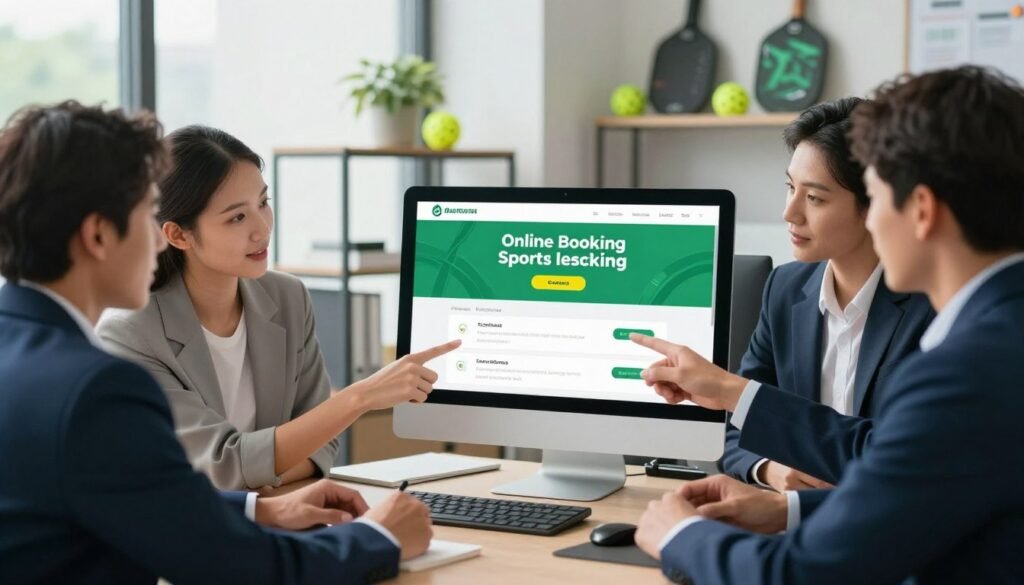
For the instructor, the primary benefit is reclaimed time. Automated systems eliminate the back-and-forth to find a mutual slot. They sync with your calendar to show only real-time availability.
This means no double bookings and fewer missed messages. The system handles confirmations, reminders, and even payments. You are freed to focus on crafting great pickleball lessons, not managing a inbox.
From the client’s view, convenience is king. They can browse available time slots and book a lesson instantly, 24/7. This meets the modern expectation for immediate service. As one platform notes, it lets users “schedule your pickleball lesson time and location online in seconds.”
Automation also reduces no-shows through automated reminders. Clients can reschedule easily if plans change. This flexibility builds goodwill and keeps sessions on track.
Platforms like TeachMe.To showcase this seamlessly. A profile might display “Next: Tomorrow, 6:00 AM” with a clear “Book” button. This transparency turns interest into action without delay.
Integrating Booking Systems into Your Service Directory Profile
To capture traffic, your booking tool must be where clients look. Your Google Business Profile and specialized directory listings are prime real estate. Integrate your scheduler directly into these profiles.
Make the “Book Now” button a central, prominent feature. When someone finds you via search, the path to your calendar should be one click away.
A robust system manages various offerings. It can set different prices for single sessions versus weekly lesson packages. This caters to both casual players and those committed to regular improvement.
This integration is a direct competitive advantage. An instructor with instant booking appears professional and organized. They convert visitors into booked students while others are still exchanging texts.
Ultimately, online booking automation is more than an efficiency tool. It signals reliability and respect for your clients’ time. It builds trust at the critical moment of conversion, ensuring your hard-won visibility turns into a full schedule of productive lessons.
Building Trust Through Testimonials and Credibility
In the competitive world of private instruction, a potential client’s final decision often hinges on a single, powerful element: trust. Unlike products, a service is purchased before it’s experienced. This makes social proof the primary currency for converting a skeptical searcher into a confident client.
A robust portfolio of credibility addresses unspoken questions. It proves quality, safety, and results before the first conversation even happens.
Collecting and Showcasing Client Reviews Effectively
Positive feedback is invaluable, but it rarely appears spontaneously. Successful instructors proactively build their review library. The best time to ask is right after a successful lesson or when a student achieves a goal.
Make the process effortless. Provide a direct link to your Google Business Profile or a feedback form. A simple text message with the link works wonders. You can incentivize feedback politely, perhaps by offering a tip for the next session, but avoid being coercive.
Once collected, showcase this social proof prominently. Feature review snippets on your website and directory profiles. Choose quotes that highlight specific outcomes.
For example, “improved my backhand control in just two sessions” is far more powerful than a generic “great lesson.” This specificity builds tangible expectations.
Highlighting Certifications, Experience, and Achievements
Quantifiable data provides instant credibility. Displaying metrics like “389 lessons given” or a “4.9 rating” offers concrete evidence of experience and satisfaction. Industry data shows the average instructor has over four years of teaching experience. Highlighting your tenure builds immediate trust.
Formal credentials are critical filters for clients. List relevant certifications like PPR Certified or IPTPA Certified. These badges signal professional training and adherence to standards.
Playing achievements also resonate. Mentioning titles like “Tournament Winner” or background as a “College Athlete” establishes high-level competence. It shows you understand the game from a competitive perspective.
Specialized experience, such as teaching kids or advanced strategy, attracts specific client segments. Platforms allow users to filter coaches by these exact credentials, directly influencing their choice.
This comprehensive credibility portfolio justifies your rates. A vetted, elite coach with proven results commands a higher perceived value. It transforms you from a service provider into a trusted partner for athletic development.
Optimizing for Mobile: A Must for Modern Coaches
Mobile devices have transformed how people discover and book local services, making optimization a critical business move. The majority of “near me” searches happen on smartphones. A poor mobile experience directly loses potential clients at the moment they are ready to decide.
This shift demands a proactive strategy. It’s about meeting clients where they are—often on the go. A seamless mobile presence captures intent that desktop-centric approaches miss.
Responsive Design and Mobile-First Indexing
Google now uses mobile-first indexing. The mobile version of your website or profile is the primary version Google uses for ranking and indexing. If your site isn’t mobile-friendly, your visibility suffers.
Responsive design solves this. It automatically adjusts layout, image size, and button spacing. This ensures content is easily readable and navigable on any screen.
This technical foundation is non-negotiable. It tells search engines your business is modern and accessible. It also provides the baseline experience users expect.
Improving User Experience on Smartphones and Tablets
Beyond technical compliance, excellent mobile user experience (UX) wins clients. Essentials include fast loading speed. Pages that lag frustrate users and increase bounce rates.
Large tap targets for buttons like “Call” or “Book” are crucial. Fingers need room to press accurately. Legible text without zooming and simplified forms also reduce friction.
An advanced step is offering a dedicated app. Platforms like TeachMe.To provide a free mobile app for iPhone and Android. Clients can manage lessons, communicate, and get notifications on the go.
This significantly enhances client retention. It builds a convenient hub for scheduling and progress tracking.
Mobile optimization extends to local listings. Ensure your Google Business Profile photos look sharp on small screens. Make your contact information one-tap actionable for calls or maps.
A seamless mobile experience caters to how players often organize games. They text friends on the fly and seek instant information about availability. Your profile must serve this immediate need.
When players want to play, they search right then. A smooth mobile journey lets them book quickly. It turns spontaneous interest into a scheduled session.
Ultimately, mobile optimization is not a technical luxury. It is a baseline expectation for any service business aiming to capture local search traffic. Investing here ensures you don’t lose clients to a competitor with a better mobile experience.
Mastering AEO for ChatGPT and Google SGE
Answer Engine Optimization (AEO) represents the next critical layer in digital visibility for service professionals. The landscape is evolving beyond traditional search engine results pages.
Tools like ChatGPT and Google’s Search Generative Experience (SGE) now provide direct, conversational answers. They pull data from trusted sources to satisfy user queries instantly.
This shift means your content must be optimized to be selected as that authoritative source. It’s about providing the best possible answer, not just ranking for a phrase.
What is Answer Engine Optimization (AEO)?
AEO focuses on structuring information for AI-driven answer engines. The goal is to have your content featured as the concise, helpful response within a chatbot or AI overview.
These systems analyze web pages for clarity, accuracy, and depth. They prefer content that directly and thoroughly answers specific questions.
Unlike traditional SEO, which aims for a website click, AEO often provides the answer upfront. This builds brand authority and trust, even if the user doesn’t immediately visit your site.
Strategies to Optimize for ChatGPT and Google SGE
Success requires a shift in content creation. Think about the exact questions potential clients ask when considering instruction.
Structure your website content in a clear Q&A format. Use natural language that mirrors how people speak. For example, create a page titled “What to Expect in Your First Pickleball Lesson.”
Answer with rich, descriptive detail. Describe focusing on foundational grips, stance, and basic shot mechanics. Mention drills that mimic the rapid pace of a real game to improve shot placement and footwork.
Address common queries like “How much do private pickleball lessons cost?” Provide transparent, factual pricing and explain the value behind different sessions or packages.
Incorporate structured data (schema markup) on your site. This helps AI systems correctly identify your business as a “Service” and understand your attributes, like certifications and service areas.
Demonstrate deep expertise on topics related to skill development. Create content that clearly outlines progression paths for different player levels, from beginner to advanced.
This depth signals to AI that you are a trustworthy source. It increases the likelihood your information will be cited in a generated answer.
AEO complements your existing local SEO efforts. By becoming the go-to source for information, you build overarching authority. This can drive brand awareness and lead to referrals, even without a direct click.
Mastering AEO is a forward-thinking strategy. It ensures your visibility as search technology continues its inevitable shift toward more conversational, answer-based results.
Conclusion: Your Path to Dominating Local Search
The journey from a passionate instructor to a fully-booked professional is paved with intentional digital strategy, not chance. This guide outlined a holistic system: moving beyond social media, securing local visibility, automating bookings, building trust, optimizing for mobile, and preparing for future search.
This builds a durable online foundation that consistently attracts high-intent clients. Implementation requires focus, but the payoff is a sustainable business less reliant on unpredictable channels.
Managing profiles, software, and content can be complex for a coach whose primary passion is teaching. Professional website and SEO packages offer the technical expertise to execute this plan effectively. They save you time and accelerate results.
With the right guidance, any dedicated coach can achieve top rankings and a full schedule. The goal is to turn search intent into lasting client relationships and a thriving practice. Explore tailored solutions designed for your success today.