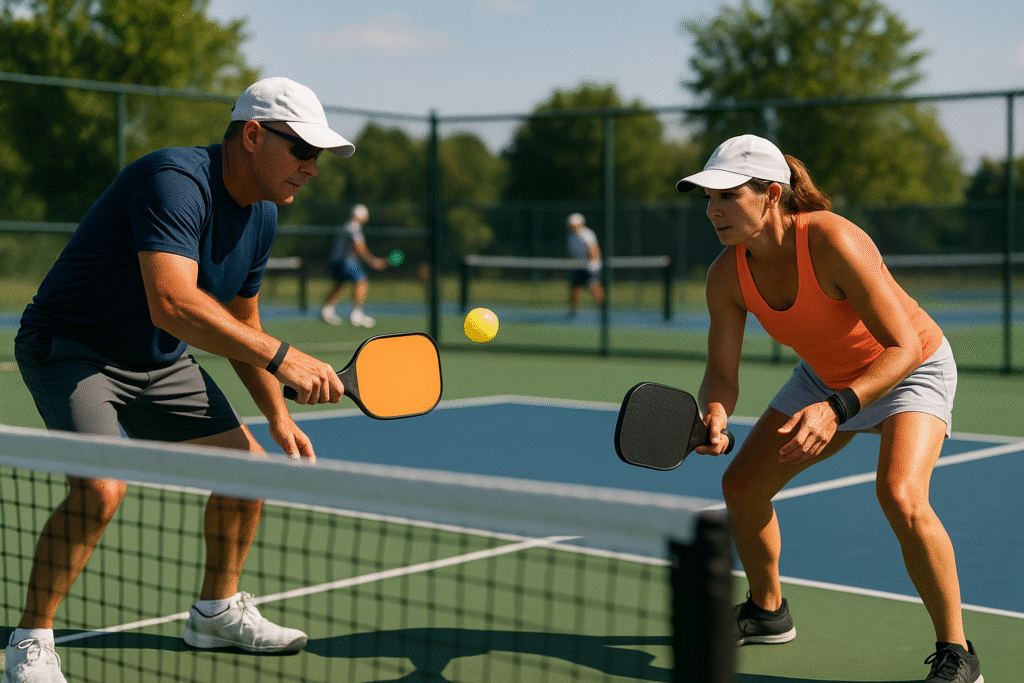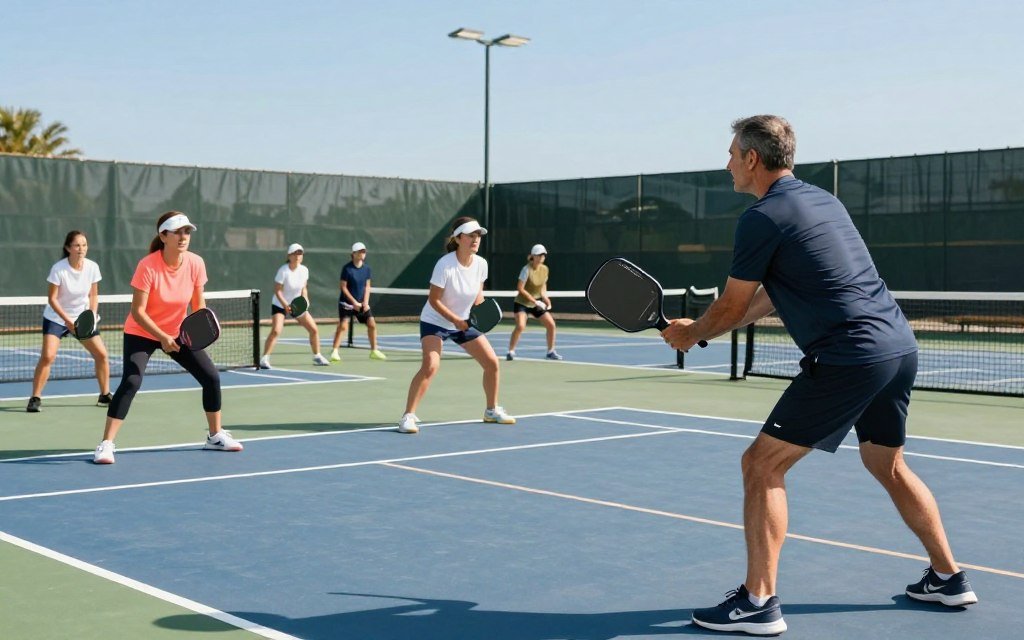
Want to improve your pickleball game? With the right tips and techniques, you can elevate your game and become a top player. Our expert advice covers everything from serving and dinking to strategy and positioning.
By learning pickleball tips and techniques, you can get better and think like a winner. Our coaching service gives you personalized advice to beat challenges and reach your goals. For one-on-one help, call 252-725-7572 or email rally@pickleballcoachs.com.
Key Takeaways
- Mastering serving and dinking techniques
- Understanding effective pickleball positioning
- Developing a winning pickleball strategy
- Improving your overall pickleball skills
- Access to personalized coaching advice
The Pickleball Revolution: Why This Sport Is Taking Over
Pickleball is taking the nation by storm, with courts appearing everywhere. People love its social and physical benefits. This growth is more than a trend; it’s a real revolution.
The Explosive Growth of Pickleball in America
Pickleball’s popularity is soaring, with more players in the U.S. than ever before. The sport is attracting athletes from all walks of life. If you’re interested, look for local coaches or clubs to join.
Why Players of All Ages Are Falling in Love with the Sport
Pickleball’s charm comes from its unique mix of fun, competition, and socializing. It boosts physical and mental health. Here are some key benefits:
- Enhanced cardiovascular fitness
- Improved hand-eye coordination
- Opportunities for socialization and community building
The Social and Physical Benefits of Pickleball
Pickleball is more than a game; it’s a way to stay active and meet people. Its social and physical benefits make it a hit with all ages. For more info or coaching tips, call 252-725-7572 or email rally@pickleballcoachs.com.
Understanding the Fundamentals of Pickleball Success
To do well in pickleball, you need to know the basics of court awareness and scoring. Learning these basics is key to getting better at the game.
Court Awareness and Positioning Basics
Good court awareness means knowing the different areas of the pickleball court. It also means knowing how to stand for the best play. This includes knowing the non-volley zones (NVZs), or “kitchen,” and how to move around them.
The ready position is a basic stance for getting ready for the next shot. It’s about standing with your feet apart, knees bent, and paddle in front. For tips on improving your ready position and court awareness, call 252-725-7572 or email rally@pickleballcoachs.com.
The Scoring System Explained
Knowing how to score in pickleball is important. Games usually go to 11 points, with a two-point lead (like 11-9).
Common Scoring Mistakes Beginners Make
Beginners often make mistakes like not calling the score loudly before serving. They also might not understand the scoring rules. To avoid these mistakes, learn the official pickleball scoring rules.
Essential Equipment for Peak Performance
To improve your pickleball game, the right equipment is key. The right gear boosts your performance, lowers injury risk, and makes playing better.
Choosing the Right Paddle for Your Playing Style
Finding the right pickleball paddle is essential. The paddle is the most important piece of equipment. Its features greatly impact your game.
Weight, Grip Size, and Material Considerations
When picking a paddle, think about its weight, grip size, and material. Light paddles give you more control, while heavy ones offer more power. The grip should fit your hand well, and the material should match your playing style. For help choosing, call 252-725-7572 or email rally@pickleballcoachs.com.
Footwear and Apparel That Enhance Your Game
While the paddle is key, footwear and apparel also matter a lot. Good footwear helps you move better on the court, giving you support and stability.
Preventing Injuries with Proper Equipment
Using the right pickleball equipment can prevent injuries. Good footwear cuts down on foot and ankle injuries. The right clothes keep you comfy and safe while playing.
Mastering the Core Pickleball Strokes
To be good at pickleball, you need to know its basic strokes. These strokes are the game’s foundation. Learning them well is key to playing well.
The Serve: Your First Opportunity to Score
The serve is very important in pickleball. It’s your first chance to get ahead of your opponent. A good serve can put pressure on the other team and open up scoring chances.
Power vs. Placement Serving Strategies
There are two main serving styles: power and placement. Power serving is about hitting the ball hard, making it hard to return. Placement serving is about aiming for specific spots on the court to find your opponent’s weak points.
Dink Shots: The Art of Soft Control
Dink shots are key in pickleball. They need soft control and precision. A good dink shot can stop an opponent’s attack and give you a chance to counterattack.
Common Dinking Errors and Corrections
Many players hit dink shots too hard or with too much spin. To fix this, work on a soft touch and controlled spin. For help with dinking and other strokes, talk to experienced coaches who can give you specific advice.
Volley Techniques That Win Points
Volley techniques are vital for winning in pickleball. Learning different volleys, like punch and block volleys, helps you counter your opponents’ shots.
Punch Volleys vs. Block Volleys
Punch volleys are hit with a firm motion. Block volleys absorb the ball’s pace and redirect it. Knowing when to use each can greatly improve your game.
For more tips on improving your pickleball, including serving and volleying, call experienced coaches at 252-725-7572 or email rally@pickleballcoachs.com. They offer personalized coaching.
The Kitchen Strategy: Rules and Tactics
Improving your pickleball game starts with understanding the kitchen rules and tactics. The “kitchen” is a key area on the court. It requires smart play.
Understanding Non-Volley Zone Regulations
The non-volley zone, or “kitchen,” is on both sides of the net. It goes 7 feet from the net to the sidelines. Players can’t volley the ball in this zone. Knowing these rules helps avoid faults.
Kitchen Violations That Cost Points
Here are some common kitchen violations:
- Volleying the ball while standing in the non-volley zone.
- Touching the non-volley zone line with any part of the body during a volley.
- Reaching over the non-volley zone to hit a volley.
Strategic Play Around the Kitchen Line
Playing smart around the kitchen line needs both rule knowledge and tactical awareness. Players must watch their and their opponents’ positions. This helps in making effective shots.
Reset Shots vs. Attack Opportunities
| Shot Type | Description | Strategic Use |
|---|---|---|
| Reset Shots | Soft shots that land in the opponent’s court, resetting the point. | Used to buy time or change the game’s pace. |
| Attack Opportunities | Aggressive shots aimed at the opponent’s feet or weak spots. | Used to put pressure on opponents and create scoring chances. |
For personalized advice on kitchen strategy, call 252-725-7572 or email rally@pickleballcoachs.com.
How to Improve Your Pickleball Game Through Deliberate Practice
Deliberate practice is key to improving in pickleball. It helps you refine your skills and beat your opponents. By focusing on specific areas and using structured practice, you can boost your game.
Solo Drills That Boost Skill Development
Solo drills are great for improving your pickleball skills. They let you work on techniques without the stress of a real game. Practicing serves and returns against a wall is very helpful.
Wall Practice Routines for All Skill Levels
Wall practice routines fit all skill levels. Beginners can work on basic strokes, while advanced players can fine-tune their skills. By changing your distance from the wall, you can practice different game situations and get better at reacting.
Partner Exercises for Rapid Improvement
Practicing with a partner can speed up your improvement. Partner exercises help you improve communication, timing, and teamwork. These are key in pickleball.
Structured Drilling vs. Game-Based Learning
Both structured drills and game-based learning are important. Drills help you master specific shots and strategies. Game-based learning lets you use these skills in real games.
For a practice plan that meets your needs, consider a professional coach. Call 252-725-7572 or email rally@pickleballcoachs.com to start.
Advanced Shot Techniques for Competitive Players
To improve your pickleball game, learning advanced shot techniques is key. These shots can give you a big advantage, making you a strong player on the court.
The Third Shot Drop: When and How to Use It
The third shot drop is a smart move that can shift the game’s direction. It helps you move from defense to offense, surprising your opponents.
Transitioning from the Drop to the Kitchen
After a good third shot drop, move quickly to the kitchen line. This lets you be more aggressive and pressure your opponents.
Effective Lobs and Overheads
Lobs and overheads are vital in advanced pickleball. A well-timed lob can push opponents back, while a strong overhead can win the point.
Defensive vs. Offensive Lobs
Knowing when to use a defensive or offensive lob is important. Defensive lobs help you avoid attacks, while offensive lobs put you in control.
Mastering the Erne Shot
The Erne shot is a tricky technique hit from the side near the net. It needs precision and timing.
Legal Execution and Timing
To play an Erne shot legally, don’t step into the NVZ before hitting the ball. Timing is critical; practice is essential to master it.
For personalized coaching on these advanced shots, consider reaching out to a professional coach. Call 252-725-7572 or email rally@pickleballcoachs.com to improve your skills and become more competitive.
Doubles Strategy: Communication and Teamwork
Effective doubles strategy in pickleball relies on communication and teamwork between partners. The ability to work together can be the key to winning or losing.
Positioning and Movement as a Team
In doubles pickleball, proper positioning and movement are key. Partners should move together to cover the court well. They should anticipate each other’s moves and fill any gaps.
Stacking: When and How to Implement It
Stacking is a strategy where both players start on the same side. Then, they move to their positions after the serve or return. It can be useful for creating mismatches or targeting an opponent’s weakness.
Verbal and Non-Verbal Communication During Play
Clear communication in pickleball is essential for success. Players should use verbal cues like “mine” or “yours.” They should also use non-verbal signals, like hand gestures, to coordinate.
Pre-Point Planning and Signals
Before each point, partners can plan their strategy. They can use signals to communicate their plans. This helps them stay in sync and execute their strategy well.
For personalized advice on improving your doubles strategy, consider reaching out to a professional coach. You can call 252-725-7572 or email rally@pickleballcoachs.com for expert guidance.
Singles Play: Adapting Your Strategy
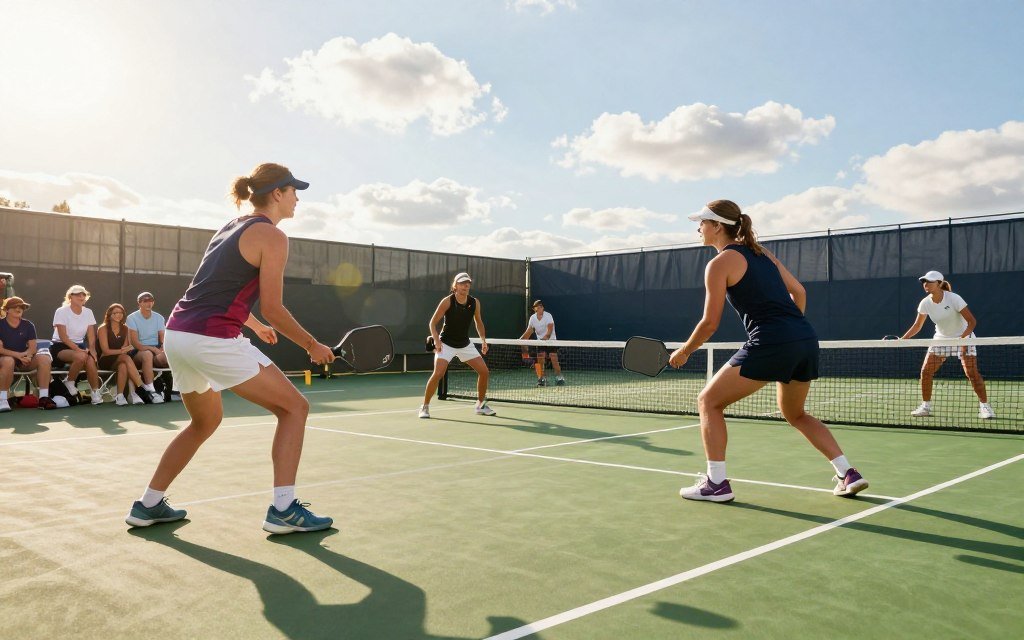
Playing singles pickleball means you need a new strategy for court coverage and shot choice. Unlike doubles, where players can work together, singles requires one player to cover the whole court. This makes strategy and staying in shape very important.
Court Coverage Techniques for Solo Players
Being good at covering the court is key in singles. Players must move fast and well across the court.
Movement Patterns That Maximize Efficiency
Players use shuffling, turning, and sprinting to move well. Planning your moves ahead can save energy and make you quicker to react.
Energy Conservation and Strategic Shot Selection
It’s hard to save energy and keep a strong offense in singles pickleball. Choosing your shots wisely can help find this balance.
Identifying and Exploiting Opponent Weaknesses
Knowing your opponent’s strong and weak points helps you plan your shots better. Targeting their backhand or a weak spot can really help you out.
| Strategy | Description | Benefit |
|---|---|---|
| Court Coverage | Move efficiently across the court | Improved response time |
| Shot Selection | Choose shots that exploit opponent weaknesses | Gain advantage |
| Energy Conservation | Conserve energy through smart positioning | Endurance throughout the game |
For tips on singles play, call 252-725-7572 or email rally@pickleballcoachs.com. It can improve your game.
Mental Game: Psychological Aspects of Winning
The mind plays a big role in pickleball success. A strong mental game can boost a player’s performance. On the other hand, a weak one can cause frustration and defeat.
Maintaining Focus Under Pressure
It’s key to stay focused in competitive pickleball. Players must keep their cool, even when it’s tough.
Routines and Rituals Between Points
Having routines and rituals between points helps players stay sharp. It could be something simple like taking a deep breath or bouncing the ball a few times.
Developing a Champion’s Mindset
A champion’s mindset is more than just winning. It’s about being resilient, adaptable, and always growing.
Learning from Losses and Building Resilience
Players must learn from their losses and grow from them. This means analyzing mistakes and using them to get better.
For personalized mental game coaching, call 252-725-7572 or email rally@pickleballcoachs.com. Building a strong mental game takes effort. But with the right strategies, players can reach their goals.
| Mental Game Aspect | Strategy | Benefit |
|---|---|---|
| Focus Under Pressure | Deep Breathing Exercises | Reduced Stress |
| Champion’s Mindset | Positive Self-Talk | Increased Confidence |
| Resilience | Analyzing Mistakes | Improved Performance |
Physical Conditioning for Pickleball Excellence
Physical conditioning is key for a winning pickleball strategy. Players need a fitness level that covers endurance, strength, and agility.
Endurance Training for Extended Play
Endurance is vital for pickleball players. It helps them keep their energy up during games. Cardiovascular exercises like running, cycling, or swimming boost endurance.
Pickleball-Specific Fitness Exercises
Adding pickleball-specific drills to your training can improve your game. Try shuttle runs, lateral movements, and quick-reaction training.
Injury Prevention and Recovery Techniques
Preventing injuries is as important as getting better at the game. Proper warm-up and cool-down routines, along with stretching exercises, can lower injury risk.
Common Pickleball Injuries and How to Avoid Them
Common pickleball injuries include strains, sprains, and overuse injuries. To dodge these, focus on proper technique, equipment maintenance, and listening to your body to avoid overdoing it.
For personalized fitness advice, call 252-725-7572 or email rally@pickleballcoachs.com. A tailored fitness plan can take your pickleball game to new heights.
Conclusion: Your Path to Pickleball Mastery
To become a pickleball master, you need to be dedicated and practice a lot. Learning the basics, perfecting your strokes, and having a winning strategy are key. These steps will help you get better at pickleball.
Keep practicing, whether alone or with a partner. The secret to getting better is to keep training and be open to changing your game.
If you want personalized coaching, call us at 252-725-7572 or email rally@pickleballcoachs.com. With our help, you’ll be on your way to becoming a pickleball pro.