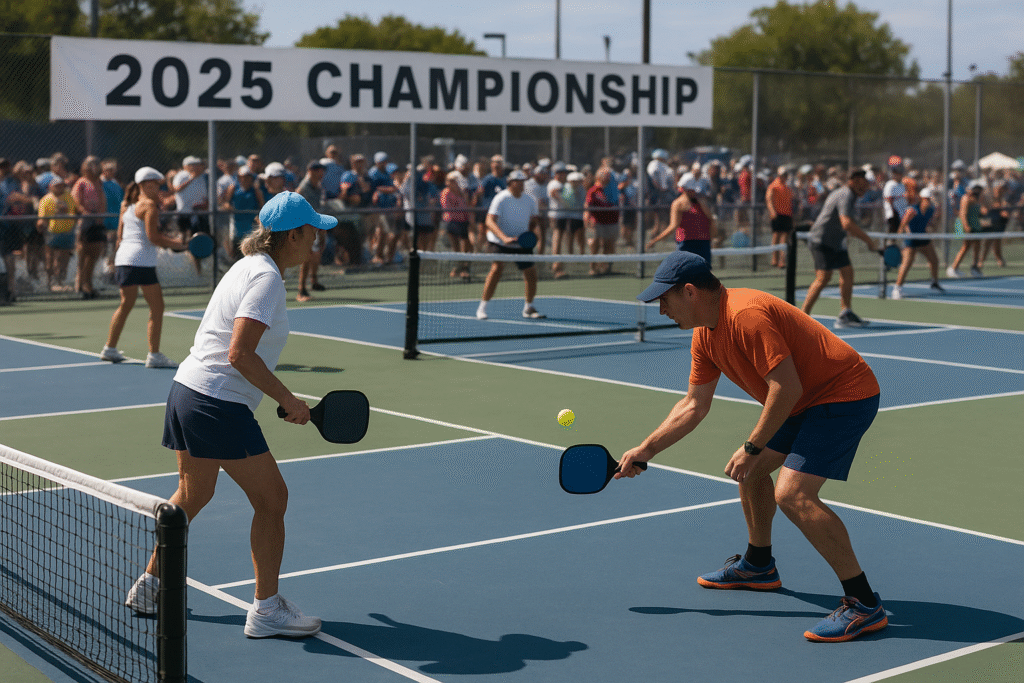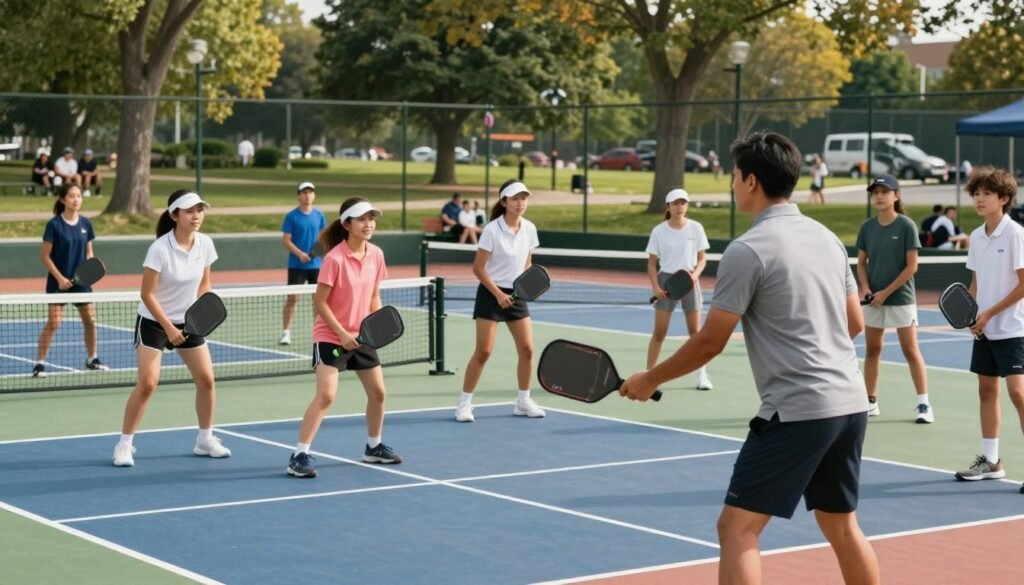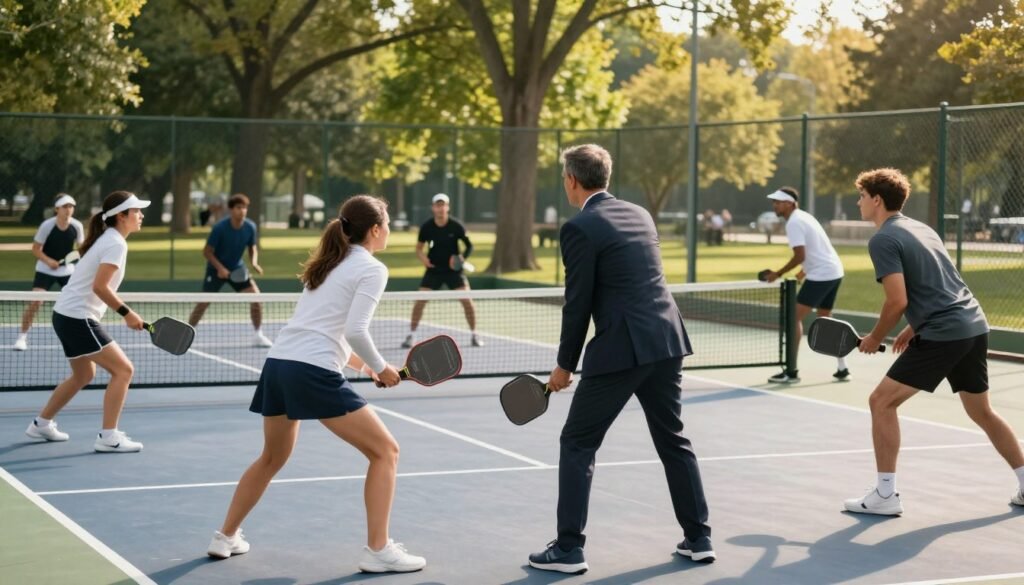
The explosive rise of this sport presents a remarkable professional opportunity. Skilled players can now build a sustainable career by sharing their knowledge.
Participation has surged 311% in three years. Over 19.8 million people now play, with an average age of 34.8. This growth fuels a massive need for qualified instruction.
Transitioning from player to professional requires a new mindset. Effective instruction involves more than playing experience. It demands a structured approach to client development and training.
This guide provides a clear roadmap. It covers essential steps like certification, marketing, and operations. The goal is to help you build a reputable and profitable enterprise.
Key Takeaways
- The sport’s participant base has grown over 300%, creating a high demand for instructors.
- Building a successful venture requires shifting from a player’s mindset to a business owner’s perspective.
- Securing reliable court access at local clubs or facilities is a fundamental early step.
- Developing a structured curriculum for lessons is key to delivering consistent value.
- Attracting new clients involves targeted marketing within your local area and community.
- The operational model offers flexibility, allowing for part-time beginnings and scalable growth.
- Long-term success depends on treating this endeavor as a serious professional commitment.
Why Pickleball Coaching is Your Next Big Opportunity
Thousands of new playing surfaces are appearing each year, but the supply of expert guides lags far behind. This imbalance creates a powerful financial opening for skilled instructors.
Private sessions typically command $50 to $100 per hour. Group clinics magnify that potential. With four to eight participants paying $10 to $30 each, an instructor can generate $40 to $240 hourly.
This revenue model offers clear paths. Full-time professionals often earn between $45,000 and $60,000 annually. Part-time teaching can yield an extra $500 to $1,500 monthly.
The need for certified instructors is urgent. Recreation departments, private clubs, and dedicated facilities actively seek contracted teachers. They need reliable talent to meet player demand.
Entry into this field is notably accessible. While certification boosts credibility with locations, the path is less stringent than in tennis or golf. This lower barrier accelerates launch timelines.
Demographics powerfully favor growth. The average participant is now 34.8 years old. This younger audience is eager to improve skills quickly, expanding the target market for quality instruction.
Your venture can be designed around life. The business model provides remarkable flexibility. One can begin with weekend clinics as a side project and scale into a primary career.
Diversifying income streams builds stability. Combining private lessons, group clinics, and specialized workshops creates a resilient revenue structure. It also maximizes use of valuable court time.
Geographic reach is no longer limited by location. Virtual training options allow a coach to connect with clients far beyond their local area. This significantly expands the potential client base.
Market projections indicate sustained, long-term growth. Providing instruction is a future-proof service within a booming industry. The opportunity is both substantial and durable.
Recognizing this potential is the first step. The next involves adopting the mindset of an entrepreneur, ready to build a reputable and profitable enterprise.
The First Step: Mindset Shift from Player to Business Owner
Many talented individuals fail to build a sustainable practice because they overlook a single, vital component: their own perspective.
A common trap is the player mindset. This focus values on-court performance above all else. It often leads to undervaluing time and neglecting essential administrative tasks.
Lasting success requires a different view. You must see yourself as the owner of a professional enterprise. Your primary product is transformative instruction, not just hitting balls.
This shift is critical for financial health. Consider the real hourly wage. A session booked for sixty minutes rarely consumes only that.
Travel, setup, communication, and billing add up. What seems like a $100 lesson has a much lower net value when all factors are counted.
| Activity | Time Invested | Financial Impact |
|---|---|---|
| Client Communication & Booking | 15 minutes | Total Time: 110 minutes (1.83 hours) |
| Commute to Facility | 20 minutes | |
| On-Court Setup & Lesson | 60 minutes | |
| Post-Session Wrap-up | 15 minutes | |
| Gross Charge to Client | – | $100.00 |
| Less Estimated Taxes & Fees (8.11%) | – | $8.11 |
| Net Income | – | $91.89 |
| Real Hourly Wage ($91.89 / 1.83 hrs) | – | $50.12 |
This calculation changes everything. It highlights why a clear pricing model and efficient systems are non-negotiable.
Your first task is to define a professional identity. What is your teaching philosophy? Will you focus on beginners, competitive players, or specific groups?
Systems create consistency. Plan your scheduling, billing, and client follow-up processes from day one. This structure saves time and builds a reputable coaching business.
Priorities must evolve. Move from personal skill improvement to measurable client outcomes. Track student progress and retention rates as key growth metrics.
Frame challenges as solvable business problems. Secure reliable court time at local clubs. Have a policy for weather cancellations. A proactive strategy builds stability.
Invest in your venture. Continued education, quality equipment, and targeted marketing are not expenses—they are essential investments.
Every decision should support profitability and sustainability. This professional foundation turns passion into a viable business model.
With this owner’s mindset established, the next steps—like certification and skill development—become clear strategic investments in your enterprise’s future.
Essential Skills and Certification to Start a Pickleball Coaching Business
Your technical prowess on the court is essential. Converting that into a viable enterprise requires external validation and protective measures.
Great instructors possess a specific toolkit. It goes far beyond strong shots and quick reflexes.
Core competencies include clear communication. You must break down complex movements into simple steps.
Lesson structuring is vital. Each session should have a clear objective and logical progression.
Patience and adaptability to different learning styles are non-negotiable. Not every student will grasp concepts at the same pace.
Do You Really Need a Pickleball Certification?
No law mandates certification for teaching this sport. Its power lies in professional credibility and marketability.
Facility managers and club directors overwhelmingly prefer certified instructors. It simplifies their risk assessment and vendor selection.
For clients, a credential signals serious commitment. It justifies a higher hourly rate and builds immediate trust.
Think of it as your professional license. It opens doors that remain closed to those relying solely on playing experience.
Choosing the Right Certification Program: PPR, PCI, or IPTPA
USA Pickleball recognizes three primary partners. Your choice depends on learning style, schedule, and goals.
Each program evaluates playing skills, teaching ability, and rules knowledge. The format and requirements differ significantly.
| Certifying Body | Format & Focus | Key Features & Benefits | Ideal For |
|---|---|---|---|
| Professional Pickleball Registry (PPR) | Blended online and on-court learning. Comprehensive business education. | Includes $6 million general liability insurance with membership. Strong emphasis on the business of teaching. | Instructors seeking an all-in-one solution with insurance and a focus on enterprise growth. |
| Pickleball Coaching International (PCI) | Level 1 is 100% online with video submissions for evaluation. | Highly flexible, learn at your own pace. Accessible from anywhere with an internet connection. | Those with busy schedules or remote locations who prefer a fully digital, self-directed process. |
| International Pickleball Teaching Professional Association (IPTPA) | Requires in-person evaluation by a master trainer. | Hands-on, immediate feedback. Often viewed as a rigorous standard for technical skill assessment. | Individuals who value direct mentorship and perform best in a traditional, observed testing environment. |
Prepare for written exams on rules and strategy. Practice demonstrating and explaining core shots.
Teaching observations assess your ability to instruct a real or simulated student. Clarity and safety are paramount.
The Non-Negotiable: Liability Insurance
Certification is a powerful tool. Liability insurance is an absolute requirement.
Accidents can happen during training. A stray ball, a slip on the court, or a strained muscle can lead to a claim.
Teaching without coverage puts your personal assets at severe risk. A single lawsuit could be financially devastating.
General liability insurance typically offers $1 to $6 million in coverage. This protects you against claims of bodily injury or property damage.
Note: PPR membership includes this vital protection. Other programs may require you to secure a separate policy.
This protection is your professional safety net. It allows you to teach with confidence and is demanded by most facilities and clubs.
Partnering with a local venue often requires proof of insurance. It shows you operate a legitimate, responsible enterprise.
Investing in certification and insurance builds a formidable foundation. This formal structure directly supports your marketing and credibility efforts.
It transforms you from a skilled player into a recognized professional. This status is the springboard for all subsequent growth.
Calculating Your Real Costs and Setting Profitable Prices
The financial foundation of a sustainable teaching practice is built on two pillars: knowing your costs and valuing your time. This section provides the blueprint for constructing a pricing model that ensures profitability.
Many instructors focus only on the revenue number. They overlook the expenses that chip away at it. A clear financial picture is essential for long-term success.
Hidden Costs Every New Coach Forgets
Initial equipment is just the beginning. Beyond paddles and balls, numerous other investments are required.
Essential startup gear includes:
- Practice balls (100 count): $150-$200
- Ball basket and pick-up tubes: $190-$270
- Portable net system: $180+
- Liability insurance: ~$200/year
The real financial drain often comes from ongoing, hidden fees. These recurring costs must be budgeted for monthly or annually.
Common ongoing expenses include:
- Court rental or facility partnership fees
- Local permits and business licenses
- Replacement balls and teaching aids (cones, targets)
- Basic first-aid kit and loaner equipment
- Marketing materials and online platform subscriptions
- Fees for booking and payment processing software
A critical, often invisible cost is time. Travel, scheduling, communication, and lesson planning are unbilled but essential. This “time cost” drastically impacts real earnings.
From Hourly Rates to Packages: Building Your Pricing Model
Charging by the hour seems straightforward. This method, however, creates income instability and can undervalue your service.
Moving to packages offers strategic advantages. Multi-lesson bundles improve upfront cash flow. They also increase client commitment and show progress.
Your final prices should reflect several key variables. Consider your geographic location and the local demand. Urban areas often support higher rates than rural ones.
Formal certification and extensive playing experience justify a premium. A clear plan for group clinics maximizes revenue per hour.
Frame your fee not as a cost, but as an investment in the student’s skill development and enjoyment of the game.
For group sessions, a simple formula works well. Calculate your desired hourly rate, then divide by the number of players. Ensure the per-person cost feels accessible.
A six-person clinic at a $150 target hourly rate translates to $25 per participant. This delivers value while meeting your revenue goal.
Understanding Your True Hourly Wage
The number you quote to a client is rarely what you earn. Taxes, fees, and unbilled time create a significant gap.
Consider a common scenario: a one-hour lesson billed at $100. First, payment processing fees and applicable state taxes are deducted.
Using a real-world example with Hawaii GET tax (4.712%) and card fees (3.4%), the gross $100 becomes $91.89 net.
The greater reduction comes from total time invested. That “one-hour” session typically consumes 110 minutes.
| Activity | Time |
|---|---|
| Client communication & booking | 15 min |
| Commute to the court | 20 min |
| On-court setup & the lesson | 60 min |
| Post-session wrap-up | 15 min |
| Total Time Invested | 110 min (1.83 hours) |
| Net Income from Lesson | $91.89 |
| True Hourly Wage ($91.89 / 1.83 hrs) | $50.12 |
This calculation reveals the truth. Your effective earning rate is nearly half the stated hourly rate.
Build your pricing model to cover this real wage, plus all your expenses. It must also provide for profit and growth.
Review and adjust your prices at least annually. As your expertise and reputation grow, your fees should reflect that increased value.
With this complete financial understanding, you can confidently answer the question, “How much do you charge?” You’ll know the number supports a thriving, professional enterprise.
Mastering Your Business Model: Private, Groups, and Clinics
The most profitable instructors don’t just teach; they architect a blend of private, group, and clinic-based sessions. This diversified portfolio creates income stability and meets varied student needs.
A single service type creates vulnerability. Relying solely on one-on-one appointments ties revenue to individual schedules. A mixed-model approach spreads risk and maximizes court time.
Each format serves a distinct purpose. Private lessons offer deep personalization. Group sessions build community and scale revenue. Multi-day camps provide immersive, premium experiences.
Your plan should intentionally sequence these offerings. A free introductory clinic can funnel interested players into a paid group series. From there, dedicated individuals may seek private training.
The High-Touch Private Lesson
This format delivers unparalleled personalized attention. It focuses on correcting specific technical flaws and building advanced strategy.
Effective one-on-one sessions go beyond rallying. They begin with a detailed skill assessment. The instructor identifies the student’s biggest opportunity for improvement.
Value is amplified through tools like video analysis. Recording a student’s swing provides undeniable visual feedback. This objective evidence makes correction more effective.
Every private lesson should conclude with a personalized homework plan. This document outlines drills to practice before the next meeting. It turns a one-hour session into a week of focused improvement.
This model commands premium prices, typically $50 to $100 per hour. It appeals to the “Quality-Over-Quantity” student. This client values rapid progress and expert guidance above cost.
The primary challenge is time efficiency. Travel and scheduling for single students have a high overhead. The real hourly wage calculation from earlier is critical here.
Maximizing Revenue with Group Clinics
Group instruction is the engine for scalable income. It allows one professional to impact multiple players simultaneously while boosting earnings.
The optimal size balances profit with quality. Four to eight participants is the sweet spot. This range allows for individual attention while creating a dynamic social environment.
Structuring sessions around specific themes is highly effective. Examples include “Third Shot Drop Mastery” or “Doubles Positioning Strategy.” A clear focus helps attract new students looking for targeted improvement.
Revenue mathematics are compelling. A 90-minute clinic with six players each paying $25 generates $150. That’s a strong hourly rate for the instructor’s time.
Youth programs represent a significant growth segment. With 21% of new pickleball enthusiasts under 24, dedicated kids’ clinics meet rising demand. These can be hosted at schools, community centers, or local clubs.
This format appeals to the “Price Shopper” and “Convenience-First” student types. A lower per-person cost feels accessible. A set weekly schedule provides routine.
Scaling Up with Workshops and Camps
Multi-day events represent the premium tier of instruction. They offer deep immersion and command fees of $200 to $400 per participant.
These intensive formats allow for comprehensive skill development. A weekend camp can cover serving, dinking, volleys, and match play. The extended time creates noticeable transformation.
Successful camps require meticulous logistics. Key planning steps include:
- Securing court access at a dedicated facility for multiple days.
- Partnering with equipment brands or local clubs for sponsorship or promotion.
- Creating a detailed itinerary that balances instruction, play, and rest.
- Marketing the event well in advance through social media and your website.
Specialized workshops cater to niche interests. Examples include “Competitive Tournament Prep” or “Senior Player Mobility & Strategy.” These targeted offerings justify higher prices.
Running larger events builds authority and community. They position you as a destination for serious training.
| Model | Focus & Value Proposition | Ideal Group Size | Price Point (Per Participant) | Revenue Potential Per Session | Best For Student Type |
|---|---|---|---|---|---|
| Private Lessons | Personalized correction, advanced strategy, video analysis, custom homework plans. | 1 | $50 – $100 (total) | $50 – $100 | Quality-Over-Quantity, serious competitors. |
| Group Clinics | Skill-specific themes, social learning, foundational drills, cost-effective access. | 4 – 8 | $15 – $25 | $60 – $200 | Price Shopper, Convenience-First, social players. |
| Workshops & Camps | Immersive multi-day training, comprehensive curriculum, community building. | 8 – 16 | $200 – $400 | $1,600 – $6,400 | Dedicated enthusiasts, tournament players, those seeking rapid improvement. |
Implementing a mixed-model structure is crucial for stability. It ensures you aren’t reliant on any single client or session type.
Efficient scheduling maximizes this approach. Block similar session types together on the same day. For example, host back-to-back group clinics on Saturday mornings.
Your marketing should reflect your service portfolio. Use your online presence to showcase different packages. A clear coaching business model presented upfront builds professional trust.
This strategic blend turns your teaching into a resilient enterprise. It leverages your expertise across multiple revenue streams, fulfilling the opportunity in today’s market.
Securing Your Foundation: Court Access and Essential Gear
Your reputation as an instructor is built not just on skill, but on the reliability of your court access and the professionalism of your gear. These operational pillars support every lesson and clinic you offer.
Without them, even the best training plan fails. Students judge value by the entire experience. A chaotic venue or broken equipment undermines confidence instantly.
Reliable court time is the first major hurdle. Public parks are often crowded or prohibit commercial teaching. A formal arrangement provides stability.
Several viable pathways exist for securing space. Your choice depends on local demand, budget, and long-term strategy.
| Option | Key Advantages | Potential Drawbacks | Best For | Recommended Action Steps |
|---|---|---|---|---|
| Public Park (with Permit) | Low or no direct rental cost. High visibility to potential players. | Unreliable availability. Noise and distractions. Often bans paid instruction. | Testing interest with free introductory clinics in a new area. | Contact the city recreation department. Apply for a special use permit. Clarify commercial activity rules. |
| Private Club Partnership | Guaranteed, high-quality courts. Built-in member clientele. Enhances professional image. | May require revenue sharing. Often mandates certification and insurance. | Building a stable, recurring schedule with dedicated groups. | Prepare a professional proposal. Highlight your certification and insurance. Offer a trial clinic for members. |
| Facility Rental (Tennis Bubble, Gym) | Weather-proof environment. Professional lighting and amenities. Clear, billable hourly rate. | Highest direct cost. Must factor rental fee into your pricing model. | Premium lessons and winter training programs in colder climates. | Negotiate a block booking discount for recurring court time. Market the climate-controlled benefit. |
| Residential/Home Court | Total scheduling control. Zero commute time. Unique, private setting. | Limited capacity. Zoning or HOA restrictions. Potential liability concerns. | Offering exclusive, high-end private sessions for a select client list. | Verify local ordinances. Enhance insurance coverage specifically for the property. Create a dedicated, safe playing surface. |
Approaching a recreation department or club manager requires a business-like structure. Frame your proposal as a solution to their needs.
Begin by researching the right contact person. Then, schedule a brief meeting to discuss community opportunity.
Present your certification and insurance proof upfront. Propose a simple trial, like a four-week beginner series. This low-risk offer demonstrates your value.
Essential tools transform a player into a professional coach. Durability and functionality always beat the cheapest option.
The core mobile kit for a pickleball coach includes several non-negotiable items. This investment typically ranges from $200 to $400.
- Portable Net System: A sturdy, regulation-height net that sets up in minutes.
- Practice Balls (100+): A large bucket of durable, consistent balls for drills.
- Ball Hopper & Pick-up Tubes: Saves time and back strain during sessions.
- Cones & Target Markers: For defining drill zones and visualizing shot placement.
- Basic First-Aid Kit: Preparedness for minor scrapes or twists.
- Loaner Paddles & Grips: Accommodates beginners and handles equipment failures.
- Heavy-Duty Gear Cart: Transports everything efficiently across parking lots.
Backup gear is critical for maintaining a professional reputation. Extra paddles, balls, and net parts prevent session cancellations.
Weather contingencies are part of the business model. Have a clear rain policy communicated in advance.
Identify indoor backup locations for extreme heat or storms. Rescheduling smoothly protects your income and client trust.
Equipment quality directly shapes the student experience. Worn-out balls or a sagging net cheapen your service’s perceived value.
New pickleball enthusiasts form first impressions quickly. Professional tools signal expertise and serious commitment.
Minimize initial costs by focusing on core items. Add specialized tools like ball machines or video analysis gear as revenue grows.
This operational foundation enables all other activities. Reliable facilities and proper gear let you execute your coaching business plan with confidence.
It turns your playing experience and skills into a deliverable, valuable service. From here, effective marketing can fill a calendar built on solid ground.
Why Social Media Alone Won’t Fill Your Calendar
A common misconception among new coaches is that a strong social media presence guarantees a full schedule. Platforms are fantastic for building community and showcasing expertise.
They play a supporting role, not a lead one. Relying on them as a primary channel misses higher-intent search traffic.
This gap represents a significant opportunity. Instructors who diversify their marketing plan capture more serious students.
The Limitations of Organic Social Reach
Algorithms control visibility on sites like Facebook and Instagram. Organic posts often reach less than 10% of followers without paid promotion.
Likes and shares feel good. They are passive feedback metrics, not active business leads.
Contrast this with platforms built for instruction. Services like TeachMe.To connect certified professionals with seekers.
They facilitate over 250 lessons daily. This happens because users there are actively searching to book training.
Your content might engage local players. Yet the platform may show it to an audience hundreds of miles away.
This misalignment wastes effort. The goal must shift from vanity metrics to conversions like website visits and booked lessons.
Social space is “rented.” You do not control the rules. A change in algorithm or policy can sever your connection to followers overnight.
Moving from Social Engager to Lead Generator
Smart professionals use social tools strategically. The aim is to drive traffic to assets they own.
An owned website and optimized Google Business Profile are foundational. You control these spaces completely.
Short video clips demonstrate teaching style effectively. Sharing student success stories builds social proof.
Every post should include a clear call-to-action. Guide viewers to your booking page or a valuable lead magnet.
For example, offer a free downloadable drill guide. Request an email address in exchange. This converts a casual scroller into a potential client.
Most local students searching for help will use Google. They type phrases like “pickleball coach near me” with intent to hire.
They are not just browsing Instagram for entertainment. This makes search visibility paramount for filling your coaching calendar.
A balanced marketing mix is essential. Let social media support a core strategy built on local online presence.
This approach captures both engaged community members and high-intent searchers. It turns online activity into a reliable business model.
The next step is mastering that local search landscape. Optimizing for “near me” queries becomes your most powerful tool.
Your #1 Marketing Tool: Ranking for “Pickleball Coach Near Me”
When potential students decide to improve their game, their first action is often a ‘near me’ search. This intent-driven behavior makes local search the most effective channel for a service-based profession.
Platforms like TeachMe.To facilitate over 250 lessons daily by connecting certified professionals with active seekers. This highlights a key truth: visibility in local results captures ready-to-book clients.
Google’s local pack occupies prime digital real estate. It displays three relevant business profiles on a map, directly answering “who is nearby?” Ranking here provides passive, high-intent traffic.
This work is an ongoing investment. It builds long-term authority and fills your calendar with students who are already looking to hire.
Optimizing Your Google Business Profile
Your Google Business Profile is your digital storefront for local searches. A complete and accurate listing is non-negotiable for ranking well.
Every section must be filled with precise information. Consistency across the web verifies your legitimacy to search engines.
Encourage satisfied students to leave reviews. These testimonials heavily influence both local ranking and a searcher’s decision to contact you.
Respond to every review, positive or negative. This shows engagement and care for the student experience.
| Profile Section | Critical Actions | Impact on Visibility & Trust |
|---|---|---|
| Business Information | Use exact business name, address, phone. Set accurate hours, including holidays. | Ensures you appear for correct geographic queries. Preuces customer frustration. |
| Categories & Services | Select primary category: “Pickleball Court” or “Sports Coach.” Add secondary like “Sports School.” List all services offered. | Signals relevance to Google’s algorithm for specific search intents. |
| Photos & Videos | Upload high-quality images of you teaching, the facility, courts, and happy groups. Update quarterly. | Provides visual proof of professionalism and activity. Boosts engagement metrics. |
| Google Posts | Share weekly updates: new clinic schedules, student success stories, or playing tips. | Keeps your profile fresh and signals an active business to the algorithm. |
| Reviews & Q&A | Prompt students for feedback. Respond publicly to all questions and reviews. | Builds social proof and improves local ranking factors. Directly influences conversion. |
| Insights & Performance | Monitor how many views, searches, and calls your profile generates monthly. | Provides data to refine your local marketing plan and understand student behavior. |
This foundation supports all other efforts. A robust profile turns searchers into visitors to your website or direct callers.
Local Keyword Strategy for Your Website
Your website must speak the language of your local community. Incorporate location-specific phrases naturally into your content.
This strategy signals to search engines that your services are relevant to a specific geographic area. It helps you attract new students from nearby neighborhoods.
Use city, town, and landmark names in key page elements. Page titles, headers, and meta descriptions are prime locations for these terms.
For example, a service page title could be “Advanced Pickleball Lessons in Springfield” instead of just “Advanced Lessons.” This simple change targets local intent.
Create dedicated content for your primary service locations. A blog post about “Best Parks for Pickleball in [Your City]” attracts local search traffic.
This content also establishes you as a community expert. It builds trust before a potential client ever picks up the phone.
Your website is your owned media hub. Optimizing it for local search ensures you capture traffic that has already filtered for proximity.
Remember to mention nearby clubs, community centers, or courts by name. This creates semantic connections search engines recognize.
This targeted approach complements your broader skills and playing experience. It frames your expertise within a local context.
Building Local Citations and Links
Local citations are online mentions of your business name, address, and phone number. Consistent listings on directories like Yelp or Apple Maps verify your legitimacy.
Search engines cross-reference this data. Inconsistencies can confuse algorithms and hurt your local ranking.
Start with major platforms. Claim and complete your profiles on Yelp, Bing Places, Apple Business Connect, and Facebook.
Then, pursue niche and community listings. Local chamber of commerce websites, sports club directories, and recreation department pages are valuable.
Earning local backlinks is a powerful trust signal. A link from a respected community site tells search engines your coaching business is a credible resource.
Practical ways to earn these links include partnering with a community center for a free clinic. You could be featured in a local news article about the sport’s growth.
Listing your services on the website of a facility where you teach often provides a strong, relevant link. These partnerships benefit both parties.
Track your local search performance using Google Business Profile insights. See how many found you via “pickleball coach near me” versus discovery searches.
This data reveals which strategy is working. It allows you to double down on effective tactics.
This foundational online visibility is not a one-time task. It requires regular maintenance and updates.
Treat it as a core component of your business model. The reward is a steady stream of local students, ready to invest in their game.
This passive lead generation frees you to focus on what you do best: teaching. It converts high-intent searchers into booked lessons and filled clinics.
Automating for Growth: Online Booking and Payment Systems
The difference between a hectic side hustle and a streamlined enterprise often lies in the adoption of digital tools. Manual administrative tasks silently drain a professional’s most precious resource: time.
Forward-thinking instructors see automation as a necessity. It reclaims hours spent on emails and invoices. This allows a focus on delivering exceptional training.
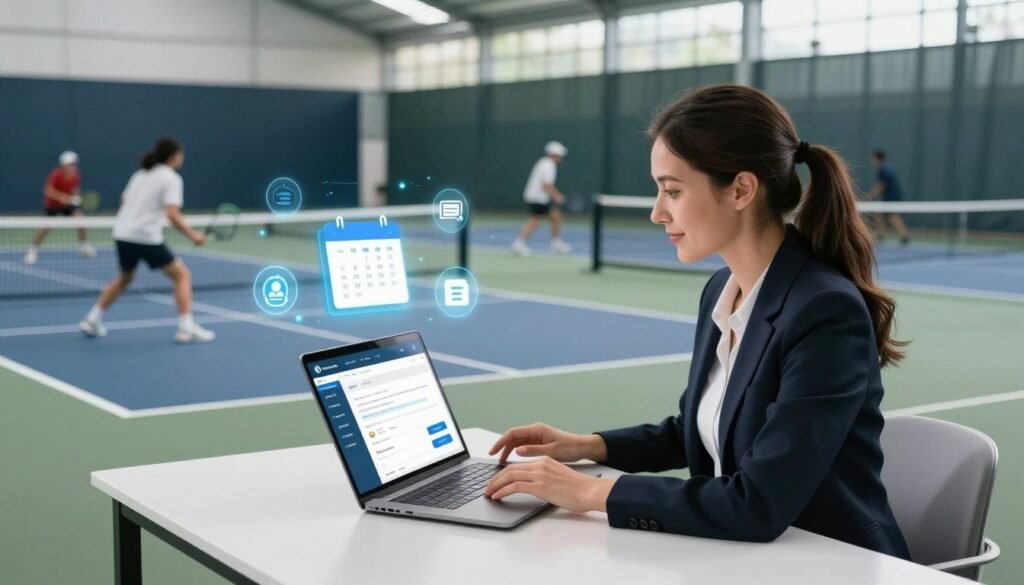
An effective system handles scheduling, payments, and client communication. It operates as a silent partner, managing logistics around the clock.
This structure is vital for scaling. It supports more lessons and clinics without increasing administrative chaos. The result is a more profitable and sustainable business model.
Choosing a Scheduling Platform
Not all booking tools are created equal. Selecting the right one depends on your service mix and growth plan.
Standalone apps like Calendly offer basic functionality. They are great for simple appointment setting. Integrated solutions like Bounce or TeachMe.To are designed for sports professionals.
These specialized platforms understand the unique needs of an instructor. They manage court reservations, group registrations, and packages seamlessly.
Key features to prioritize include:
- Calendar Syncing: Integrates with personal calendars to prevent double-booking.
- Customizable Appointment Types: Set up distinct slots for private sessions, clinics, and workshops.
- Automated Reminders: Reduce no-shows with email or SMS confirmations sent before sessions.
- Payment Processing: Collect fees securely online at the time of booking.
- Client Management: Maintain a database of student profiles, notes, and attendance history.
| Platform Type | Primary Focus | Best For | Considerations |
|---|---|---|---|
| Generic Scheduler (e.g., Calendly) | Simple, one-on-one appointment booking. | Instructors offering only private lessons with a simple pricing model. | May lack features for group management, court logistics, or multi-session packages. |
| Integrated Sports Solution (e.g., Bounce, TeachMe.To) | End-to-end management for athletic training businesses. | Professionals running a mix of private, group, and clinic-based services. | Often includes sport-specific features, higher fees, but saves significant operational time. |
| All-in-One Business Suite (e.g., HoneyBook) | Combining scheduling, CRM, invoicing, and contracts. | Established coaches looking to manage all client-facing operations in one place. | Higher cost and complexity, but powerful for scaling a full-service coaching business. |
These systems act as a 24/7 salesperson. Potential clients can view real-time availability and book instantly. This eliminates frustrating back-and-forth messages.
Integration is straightforward. Embed a booking widget directly into your website. Link to it from your social media profiles. This creates a smooth journey from discovery to purchase.
How Automation Saves Your Most Valuable Asset: Time
Every minute spent on administrative work reduces your effective hourly rate. Automation directly recaptures those minutes, boosting your real earnings.
Consider the manual process for a single lesson. It involves multiple emails to agree on a time, send reminders, and then process payment. This can easily consume 15-20 minutes of unbilled labor.
An automated system handles all these steps. It quantifiably saves hours each week. This time can be reinvested into developing new skills, marketing, or simply resting.
Platform fees are an investment, not an expense. The time saved and increased client conversion consistently outweigh the monthly cost.
Let’s quantify the impact. If automation saves five hours of admin work per week, that’s over 250 hours annually. For an instructor charging $80 per hour, that represents $20,000 of billable time reclaimed.
This efficiency directly enhances the student experience. A professional, seamless booking process builds immediate trust. It signals that your operation is organized and legitimate.
These tools also serve as a powerful client relationship management system. Track attendance, send personalized follow-ups, and manage packages effortlessly. This feedback loop helps retain students.
Addressing a common concern, platform fees are a manageable operational cost. They typically range from 2-5% per transaction or a flat monthly subscription. The return in saved time and reduced missed bookings is substantial.
Adopting this technology is a critical evolution. It moves a professional from being a solopreneur juggling tasks to a business owner with efficient systems. This step is fundamental for anyone serious about long-term growth.
The operational calm it creates is invaluable. You can focus entirely on your strategy on the court. Your digital foundation handles the rest, reliably and professionally.
Building Unshakeable Credibility with Testimonials and Results
A prospective student’s final decision to book a lesson often hinges on one critical factor: social proof. Your playing experience and technical skills establish a baseline. Authentic student success stories provide the decisive evidence that overcomes hesitation.
This proof directly addresses value concerns. It transforms your service from an abstract cost into a tangible investment. Potential clients see real people achieving real goals.
Credibility built this way is unshakeable. It justifies your pricing model and fills your calendar. This section details how to systematically collect and showcase this powerful asset.
How to Collect Powerful Video Testimonials
Generic praise has limited impact. Phrases like “great coach” are nice but forgettable. Specific, results-oriented stories resonate deeply and drive action.
The most compelling testimonials follow a simple narrative arc. They describe a student’s starting point, the challenges faced, the training process, and the measurable outcome. This journey provides context and builds emotional connection.
Timing your request is crucial. Approach a student immediately after a clear win. This could be mastering a difficult shot, winning a first match, or simply gaining consistent confidence.
Make the process easy and guided. Provide a simple script or a few prompting questions. This reduces their anxiety and elicits detailed feedback.
“After our five lessons focusing on your third-shot drop, I noticed a huge difference in your control during our last game. Would you be willing to share a quick 30-second video about that experience? I can send you a couple of questions to make it easy.”
Technical quality matters, but perfection isn’t required. Use a smartphone in a quiet, well-lit location. Horizontal video is more professional for playback.
Ensure good audio. Get close to the speaker or use a lavalier microphone. Clear sound is often more important than perfect video.
Always obtain written permission to use the footage. A simple email confirmation protects you and respects the student’s contribution.
This proactive approach turns happy moments into permanent marketing assets. It builds a library of social proof that works for you continuously.
Showcasing Student Transformations
Visual evidence is extraordinarily persuasive. A before-and-after video montage demonstrates improvement in a way words cannot. It shows, rather than tells, the value of your instruction.
Create these compilations ethically. Obtain explicit consent for using “before” footage, often captured during early assessment sessions. Pair it with “after” video from a recent match or drill.
Keep these clips short and focused. A 60-second reel showing a serve transformation or improved court movement tells a powerful story. Add simple text captions to highlight the key change.
Feature these transformations across your owned platforms. Your website’s testimonial page is the central hub. Embed videos directly alongside written quotes.
Leverage your Google Business Profile. Upload video testimonials to the photos/videos section. Respond to reviews by thanking the student and referencing their specific achievement.
On social media, share these stories as case studies. Detail the coaching process that led to the result. Explain the drills, the strategy adjustments, and the mindset work involved.
This content does more than attract. It pre-qualifies serious students. Those seeking similar results will self-identify, making your sales conversations much easier.
| Format | Core Strength | Best Placement | Production Tip | Psychological Impact |
|---|---|---|---|---|
| Written Quote | Highlights specific quotes & metrics. Easy to scan. | Website sidebar, service pages, booking platform. | Edit for clarity, keep to 2-3 sentences. Always attribute with name and location. | Builds logical credibility through detailed results. |
| Video Testimonial | Conveys emotion & authenticity. Builds personal connection. | Website landing page, Google Business Profile, social media feeds. | Guide with questions. Capture in good light. Keep under 90 seconds. | Builds emotional trust through genuine human expression. |
| Before/After Montage | Demonstrates tangible, visual proof of skill progression. | Website portfolio, YouTube channel, clinic promotion ads. | Use side-by-side or split-screen editing. Add minimal text commentary. | Overcomes skepticism by providing undeniable visual evidence. |
| Case Study Narrative | Details the full journey & coaching methodology. | Blog post, email newsletter, detailed service page. | Structure with Challenge, Solution, Result. Include student quotes and data. | Positions you as a strategic expert capable of solving complex problems. |
This portfolio directly supports your pricing power. Demonstrated results justify premium rates and multi-lesson packages. Clients pay for outcomes, not just time.
Establish a system for ongoing feedback collection. Send a simple form after a lesson series concludes. Ask what worked, what could improve, and if they achieved their goal.
This feedback loop serves two purposes. It provides raw material for new testimonials. More importantly, it offers crucial insights to refine your services and student experience.
Turn every satisfied client into a potential referral source. A strong testimonial is the final piece that convinces a hesitant searcher. It provides the social proof needed to click “Book Now” with confidence.
Your credibility becomes your most valuable asset. It transforms your venture from an unknown service into a trusted, results-driven institution within your local community.
Technical Must-Haves: Mobile Optimization and Core Web Vitals
In an era where smartphones are the primary gateway to local services, a slow or clumsy website can instantly repel potential clients. Your online presence must perform flawlessly on small screens. This technical excellence directly impacts your ability to attract and retain students.
Think of your site as your digital teaching facility. If the door is hard to open or the lights flicker, visitors leave. A seamless mobile experience builds immediate trust and professional credibility.
Why a Mobile-First Website is Non-Negotiable
Most local searches for services like “pickleball coach near me” happen on mobile devices. This makes the smartphone the primary point of contact for your coaching business.
A site designed for desktop often fails on a phone. Text becomes tiny, buttons are impossible to tap, and navigation collapses. Visitors will not struggle; they will simply bounce to a competitor’s site.
This isn’t just about convenience. Google explicitly uses mobile-friendliness as a ranking signal. A poor mobile website hurts your visibility in local search results.
Your professional reputation is on the line. A broken or slow site suggests inattention to detail. It undermines the confidence a prospective client places in your training abilities.
Modern users expect instant, intuitive access. They want to view your services, read testimonials, and book a lesson in seconds. Anything less creates friction and lost opportunity.
Ensuring Your Site Loads in a Flash
Speed is the cornerstone of a positive user experience. Google measures this through Core Web Vitals. These are key metrics for loading, interactivity, and visual stability.
Let’s break them down simply. Largest Contentful Paint (LCP) measures how fast the main content loads. Aim for under 2.5 seconds.
Interaction to Next Paint (INP) tracks how quickly the page responds to a tap or click. A fast response feels snappy and professional.
Cumulative Layout Shift (CLS) quantifies visual stability. Have you ever tapped a button, only for it to move as the page loads? That’s a poor CLS score, and it frustrates users.
Improving these scores requires practical action. Follow these steps to enhance your site’s mobile performance.
- Compress Images: Large, unoptimized photos are the top cause of slow loading. Use tools to reduce file size without sacrificing quality.
- Choose a Mobile-Responsive Theme: Select a website template built specifically for smartphones. It will automatically adjust layouts for different screen sizes.
- Minimize Code: Reduce unnecessary scripts and plugins. Each extra line of code can delay page rendering.
- Use Reliable Hosting: A cheap, shared hosting plan often leads to slow server response times. Invest in quality hosting for better speed.
Clear, touch-friendly navigation is essential. Buttons should be large enough for a finger to tap easily. Contact information and booking links must be prominent and accessible.
Avoid complex design elements that look good on a desktop monitor. Flashy animations or intricate layouts often break or crawl on mobile connections.
Technical optimization is not an optional tech task. It is a direct contributor to converting visitors into leads. A one-second delay in page load can increase bounce rates by over 30%.
Use free audit tools to identify issues. Google’s PageSpeed Insights and Mobile-Friendly Test provide specific, actionable feedback. They highlight exactly what needs fixing on your website.
Frame this work as a critical marketing and operational plan. A fast site retains visitors, improves search rankings, and projects a polished image. It meets the user where they are—on their phone, ready to decide.
This preparation ensures you don’t lose a potential student in the crucial first seconds. Your technical foundation supports all other efforts to grow your practice.
Future-Proofing with AEO: Optimizing for ChatGPT and Google SGE
Answer Engine Optimization (AEO) represents a fundamental shift in how professionals must structure their web presence for discovery. It moves beyond traditional SEO, which ranks pages in a list of blue links.
This new approach focuses on providing direct answers within AI-powered interfaces. Tools like Google’s Search Generative Experience (SGE) and chatbots like ChatGPT synthesize information from the web.
They present it in a conversational, summarized format. For an instructor, appearing in these answers is the next level of digital authority.
Your content must be prepared for this evolution. It needs to feed the “answer engines” that power these experiences.
This ensures your expertise is cited when potential students ask questions. It builds visibility in the most modern search landscapes.
Structuring Content for Answer Engines
AI tools parse web pages differently than human readers. They look for clear structure and authoritative signals to extract useful information.
Your service pages and blog posts must be organized for easy ingestion. Use descriptive headings that plainly state the topic of each section.
Break down complex information into scannable formats. Bulleted lists and numbered steps help AI understand key points quickly.
Write in a clear, concise manner. Directly answer common questions a player might have before booking.
For example, instead of lengthy prose, state: “A beginner lesson focuses on grip, stance, and the basic rally.” This declarative style is perfect for AI extraction.
Authority is crucial. Mention your certification, years of playing experience, and specific skills you teach.
This signals to algorithms that your content is a trustworthy source. It increases the likelihood of being featured in a generated answer.
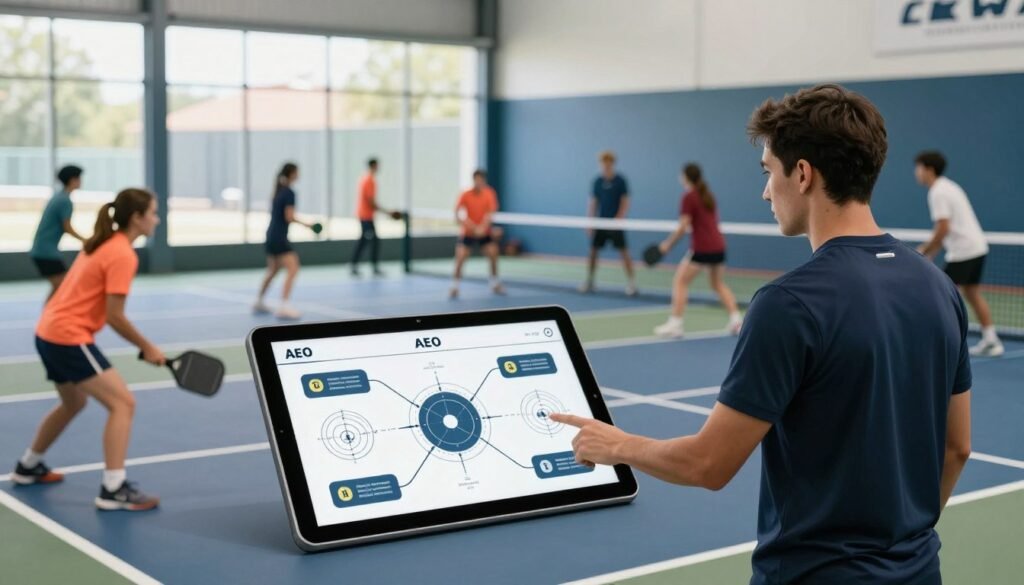
This strategy complements your local SEO efforts. While traditional optimization gets you on the map, AEO gets your knowledge into the answer box.
It positions you as the go-to expert, not just a local listing. This dual approach captures both high-intent searchers and those seeking quick advice.
Using FAQ Schema to Feed AI Tools
One of the most powerful technical tools for AEO is FAQ schema markup. This is code added to your website that labels questions and answers explicitly.
Search engines and AI assistants can easily ingest this structured data. They then confidently cite it when responding to user queries.
Implementing it is a practical step toward future-proofing your online presence. It makes your helpful content machine-readable.
Begin by creating a dedicated FAQ page. Address common concerns a new client typically has.
Cover topics like your pricing model, certification, what to bring to a lesson, and your cancellation policy. Answer each question in two to three concise sentences.
Here is a simple guide to adding the schema:
- Use a plugin if your website runs on WordPress (e.g., Schema Pro, Rank Math).
- For custom sites, add JSON-LD code provided by Schema.org to the page’s HTML.
- Ensure each question is wrapped in a proper heading tag (like H3).
- Place the answer directly below in paragraph tags.
- Validate your markup using Google’s Rich Results Test tool.
FAQ schema doesn’t just help AI; it also creates rich results in traditional search, often displaying your Q&A directly on the results page. This increases click-through rates.
This plan feeds the growing ecosystem of answer engines. When someone asks a voice assistant, “How much do pickleball lessons cost?” your structured data could supply the response.
It ensures your business information is presented within AI-generated summaries. This goes beyond merely being a blue link.
Adopting AEO principles builds long-term authority. It keeps you ahead of competitors who optimize only for yesterday’s search.
The fundamentals of providing excellent, helpful content remain paramount. AEO is simply about structuring that content for new consumption methods.
Connect this technical strategy to your core goal: becoming the most visible and trusted source of instruction in your area. It turns your knowledge into a format that future search technology craves.
Your Clear Path to Action: Crafting the Perfect Website and CTA
Every piece of your marketing and operational strategy converges on a single digital asset: your professional website. It is the central hub where local search leads, social media traffic, and word-of-mouth referrals ultimately land.
This site must do more than just exist. It needs to synthesize your credibility, showcase your services, and convert visitor curiosity into booked appointments. A clear, functional website is your final, most powerful tool.
Designing a Service-Centric Website
A common mistake is building an online biography. The focus should be on the student’s transformation, not just your personal history. Your offerings and their benefits must be the hero.
Adopt a service-centric design. Lead with what you provide and the results players can expect. Your credentials support this value proposition; they are not the main event.
Essential pages create a logical journey for a potential client. Each page has a specific job in guiding them toward a decision.
| Page | Primary Purpose & Key Content | Essential CTA for This Page |
|---|---|---|
| Homepage | Immediate value proposition. Who you help and how. Clear service overview with visuals of training in action. | “View My Coaching Packages” or “Book a Discovery Call” placed prominently above the fold. |
| About Page | Builds trust through your story, philosophy, and credentials. Highlights your playing experience and teaching skills. | “Ready to Improve Your Game? View Packages” leading back to the services page. |
| Services/Packages | Detailed breakdown of offerings: private lessons, group clinics, workshops. Clear pricing and what’s included. | Multiple “Book This Package” buttons integrated with your scheduling system. |
| Testimonials | Social proof through video stories and written quotes. Showcases specific student transformations and results. | “Get Similar Results. Book Your First Lesson Today.” |
| Contact/Booking | Direct path to appointment. Embedded booking calendar or clear contact form. Reassurance on next steps. | The booking widget itself is the primary CTA here. |
This structure answers a visitor’s questions in sequence. It builds interest, establishes authority, presents options, provides proof, and finally, asks for the commitment.
View your site through the lens of a potential client. Does every element guide them toward taking the desired action? If not, refine the plan.
“View My Coaching Packages”: The Power of a Direct CTA
Vague language creates friction. Phrases like “Learn More” or “Get in Touch” force visitors to guess the next step. A direct call-to-action eliminates this confusion.
Specific CTAs tell people exactly what to do. “View My Coaching Packages” is clear and intent-driven. It matches the mindset of someone ready to evaluate options.
Effective CTAs often use first-person language. “View My…” or “Book Your…” creates a personal connection. It feels like a direct invitation from you, the expert.
Psychology plays a key role. Incorporating gentle urgency can motivate action. For example, “Book Now – Limited Spots Available” taps into scarcity.
Reducing perceived risk is also powerful. Offering a “Money-Back Guarantee for Your First Lesson” alongside the CTA lowers the barrier to commitment.
The difference between “Contact Us” and “Book Your Assessment Lesson” is the difference between a maybe and a yes. Your language should assume the visitor is ready to move forward.
Placement is critical. Your primary CTA should live in the website header, visible on every page. Repeat it above the fold on the homepage and within service descriptions.
Seamless integration with your booking system is non-negotiable. The click on “View My Coaching Packages” should lead directly to your service menu or calendar.
This creates a smooth journey from interest to scheduled appointment. It turns your website from a digital brochure into a conversion tool for your coaching business.
The ultimate goal is to make the path to becoming a student obvious and effortless. A service-centric design paired with direct, action-oriented language achieves this.
It transforms your online presence into a reliable engine for growth. This final piece solidifies your professional business model and captures the opportunity at hand.
Conclusion: From First Lesson to Thriving Business
Your success as an instructor ultimately rests on a simple triad: finding the right players, securing reliable court access, and implementing efficient systems. This guide has mapped the journey from mindset to marketing.
Each challenge is a solvable step in a proven structure. Begin by choosing one action, like finalizing your service plan or optimizing your local search presence. Momentum builds from that first decision.
The reward is a thriving coaching practice with a full calendar. You build a respected local brand while doing what you love. The growing pickleball community needs dedicated professionals now.
Transform your passion into a sustainable career. Take that first step today.