The sport’s popularity is exploding. To thrive in this competitive market, standing out is essential. A centralized, professional online presence is now the baseline for success.
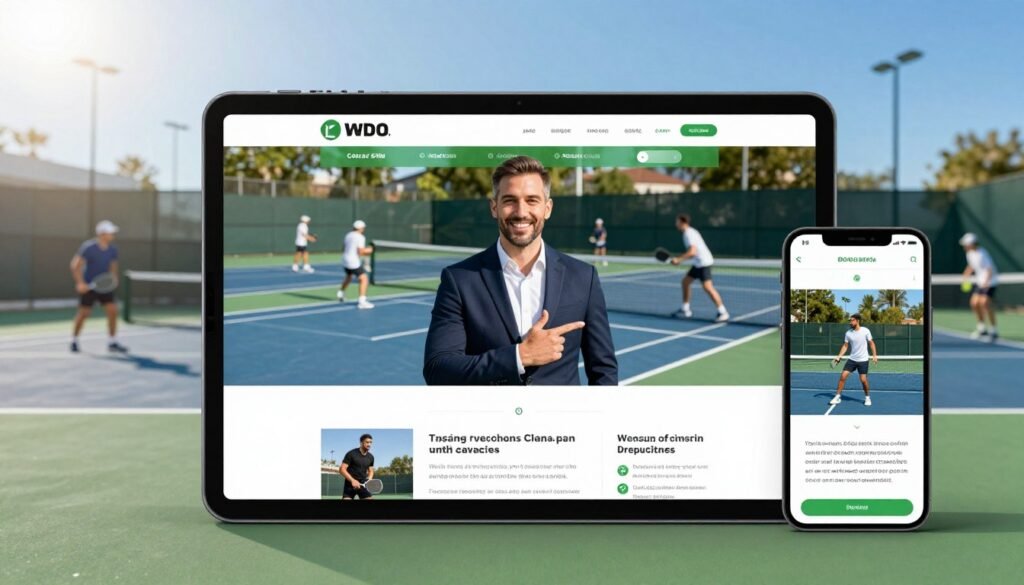
A dedicated site acts as your digital storefront. It lets potential clients explore your philosophy, experience, and services on their own time. This builds trust before the first lesson even begins.
Unlike scattered social media profiles, you have complete control over your brand story. It becomes your ultimate credibility anchor. For instance, pro instructor Mark Price highlights his state championships and signature camps online.
Platforms like The Art of Pickleball demonstrate the power of a digital hub. They house vast video libraries and custom plans, catering to players at every level.
The modern athlete expects to research trainers online. A professional site meets this intent directly. It captures serious leads ready to invest in their training and skill development.
This is a strategic business decision. It positions you as an authority, structures your service packages clearly, and opens new revenue streams. Most importantly, it future-proofs your practice against social media changes.
Key Takeaways
- A professional online hub is essential to stand out in a growing and competitive athletic instruction market.
- Your own site serves as a controlled, credible digital storefront for your services and philosophy.
- It meets the modern player’s expectation to thoroughly research and vet instructors online.
- Examples from leading pros show how a website can showcase achievements, resources, and structured programs.
- This digital asset helps scale your business, opening revenue beyond in-person sessions.
- Owning your platform protects your client relationships from the volatility of social media algorithms.
- Building a website is a fundamental step for establishing long-term authority and a sustainable practice.
The Limitations of Social Media for Pickleball Coaches
While social media is a powerful tool for engagement, it has significant drawbacks for professional athletic instruction. Many instructors rely on it as their primary online hub. This approach creates a fragile digital foundation.
Platforms like Instagram are excellent for sharing quick tips and building community. They cannot, however, replace a dedicated, owned online property. Relying solely on them means renting space subject to unpredictable changes.
Missing Out on Google Search Traffic
This is the most critical limitation. Social media profiles are not indexed by search engines with the same authority as a standalone site. They become invisible for high-intent local searches.
Someone looking for “pickleball coach near me” is using Google, not scrolling a feed. Without a website, you miss this motivated audience entirely. They are ready to invest in their game.
Leading professionals understand this. For example, The Art of Pickleball uses its site as the primary home for its extensive video library. Instructor Mark Price optimizes location pages for areas like Atlanta.
These strategies capture search traffic social platforms cannot. They allow you to rank for terms related to specific skills, drills, and court strategy.
Lack of Control and Professionalism on Social Platforms
Your brand message is at the mercy of platform algorithms and design constraints. Competitor content and ads dilute your professional image. Important credibility markers get lost.
Client testimonials and championship titles can be buried in a fast-moving feed. On your own site, you display them prominently. This builds immediate trust with new players.
Functionality is also limited. Scheduling and booking integrations on social media are often clunky. A dedicated site seamlessly integrates professional automation tools. This saves everyone time.
Social media excels at conversation. It fails to provide the structured, in-depth learning path serious athletes seek. They want a clear progression for their play over years.
Ultimately, using only these platforms cedes control. Your owned digital asset works for you constantly. It captures leads and converts them into long-term clients, building a sustainable practice.
Essential Features of a High-Converting Pickleball Coach Website
Specific, strategic features transform a simple webpage into a powerful client acquisition tool. Your online hub must guide visitors smoothly from curiosity to commitment.
It’s about creating an efficient system. This system showcases your value, builds confidence, and removes friction from the sign-up process.
Streamline Scheduling with Online Booking Automation
Manual back-and-forth emails are a major time drain. They also create a poor first impression. Integrated online booking is non-negotiable for a modern practice.
Tools like Calendly or Acuity sync directly with your calendar. They allow clients to view your real-time availability and book instantly, 24/7. This eliminates double-booking and administrative headaches.
Top instructors leverage this automation. For example, Mark Price’s site uses clear calls-to-action like “COUNT ME IN” for his camps. This direct integration projects a professional, organized image and captures leads the moment they’re ready.
Build Trust with Client Testimonials and Credibility Displays
New players need social proof before investing in their training. Your site must provide this proof immediately.
Feature authentic testimonials with full names and locations. A quote like “Scott Bradway | Lake Oconee, GA” carries far more weight than an anonymous one. Highlighting achievements, such as “3x Georgia State Champion,” establishes your competitive pedigree.
“The personalized feedback on my backhand shot completely changed my game at the net.”
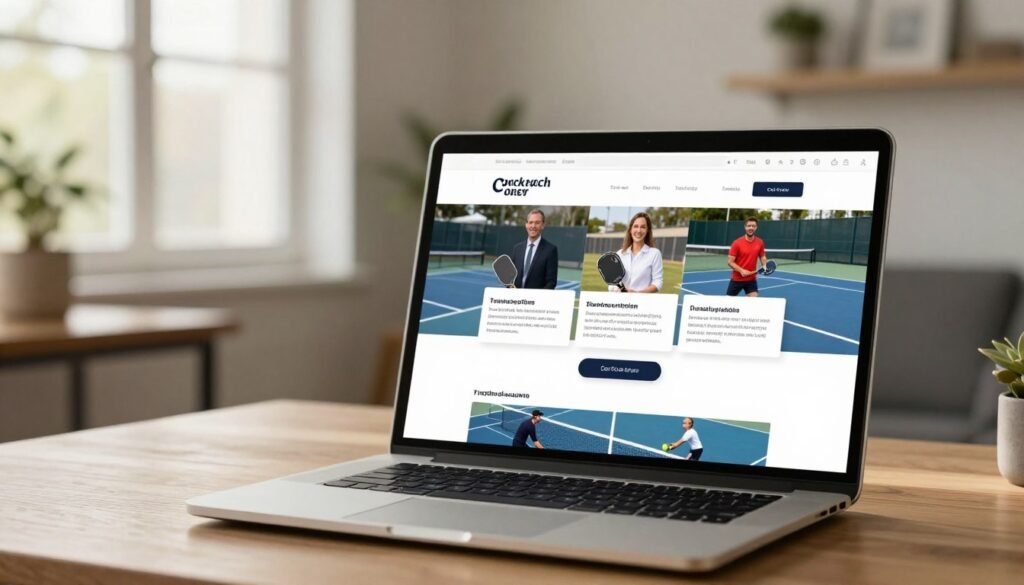
A dedicated section for this content, as seen on leading sites, helps potential clients overcome hesitation. It provides tangible evidence that your instruction delivers real results.
Prioritize Mobile Optimization for Today’s Players
Athletes research and book on their phones. A site that isn’t mobile-responsive frustrates users and loses business.
Seamless mobile access is critical. Consider platforms like My DUPR Coach, built as a mobile-first app for submitting video. Your hub must offer a similar experience for viewing videos, reading lesson details, and booking.
Services like The Art of Pickleball’s “Free Trial” rely on this. A smooth mobile interface ensures players can engage with your content anywhere, encouraging them to play better.
Beyond these core three, other elements solidify your platform’s effectiveness.
| Feature | Purpose | Impact |
|---|---|---|
| Clear Service Menu | Details offerings like beginner clinics, advanced drills, or small group sessions. | Helps visitors instantly understand their options and find the right fit for their goals. |
| High-Quality Media | Photos and video of you teaching, the court, and student success. | Adds authenticity and gives a feel for your teaching style and environment. |
| Educational Blog/Tips Section | Regular updates on strategy, equipment, and skills. | Reinforces expertise, aids player development, and significantly boosts organic search traffic over time. |
These components work together as a single system. They inform, build trust, and simplify the path to enrollment. The result is a digital asset that actively grows your practice by meeting the needs of today’s dedicated players.
Advanced Optimization for Local Search and AI Tools
The next frontier for athletic instructors involves mastering two critical optimization channels: local search and artificial intelligence tools. Visibility is no longer just about being online. It’s about being precisely where potential clients are looking, whether that’s on a map or inside a conversational AI.
This dual strategy captures high-intent seekers at every point of discovery. It future-proofs your practice against evolving search habits.
Dominate Local Searches for “Pickleball Coach Near Me”
Most players start their search with a location. Phrases like “pickleball coach near me” are incredibly common. Ranking for these terms is a direct pipeline to local clients ready to book.
Your digital hub must be meticulously optimized for geographic relevance. This goes beyond just listing your city.
Create dedicated pages for each major area you serve. A professional like Mark Price does this effectively. His site features pages for Atlanta, Marietta, and Roswell. It also mentions communities like Woodstock and Habersham.
This granular detail signals to search engines that you are relevant to those specific locales. It dramatically improves your chances of appearing in local results.
Claiming and fully optimizing your Google Business Profile is equally vital. Ensure your name, address, phone number, and hours are accurate. Embedding a map of your service areas on your site provides a clear visual cue.
Encourage your satisfied athletes to leave reviews on this profile. Positive ratings directly boost your local ranking. They also build instant trust with new visitors researching their options.
Mentioning specific neighborhoods or landmarks, like a community center in San Diego, adds another layer of local context. This approach turns your site into a magnet for nearby players seeking to improve their game.
Implement AEO for ChatGPT and Google SGE Visibility
Search is becoming conversational. Tools like ChatGPT and Google’s Search Generative Experience (SGE) answer questions directly. To be featured, your content must be structured for these AI systems.
This is where Authoritative Expert Optimization (AEO) comes in. AEO involves creating content that clearly and thoroughly establishes your expertise. AI tools prioritize sources that demonstrate depth and authority.
Structure your service descriptions and blog posts to answer common questions in detail. For example, create in-depth guides on specific skills like mastering a third-shot drop. Explain your teaching methodology clearly.
Using schema markup—a code language for search engines—helps AI understand your offerings. It can highlight your credentials, lesson types, and frequently asked questions.
Adopt a clear question-and-answer format in your content. This aligns perfectly with how people query AI assistants. Cover topics like “What are the best drills for beginners?” or “How do I set realistic goals?”
This comprehensive, well-organized information increases your chance of being cited as a source. It positions you as a go-to expert not just locally, but in the broader digital landscape.
Optimizing for both traditional local SEO and emerging AI search ensures you’re found everywhere. It attracts local players while opening doors for remote instruction or content partnerships. This strategy saves time and builds a sustainable practice for the long term.
| Optimization Focus | Key Tactics | Primary Benefit |
|---|---|---|
| Local Search | Location pages, Google Business Profile, local reviews, service area maps. | Directly captures clients searching for instruction in your specific geographic area. |
| AI Search (AEO) | Schema markup, detailed Q&A content, comprehensive expertise demonstration. | Positions you as an authoritative source in AI-generated answers, building brand authority beyond local search. |
Conclusion: Launch Your Professional Coaching Hub
Your expertise deserves a permanent home that works for you around the clock. Successful practices like Mark Price Pickleball and The Art of Pickleball show the tangible benefits of a professional online hub. Platforms like My DUPR Coach highlight how technology can personalize instruction and expand your reach.
This digital cornerstone is essential for a modern business. It captures search traffic, showcases your credibility, and streamlines operations. You move beyond social media to own your presence and connect directly with players.
Implementing key features creates a seamless client experience. It converts interest into signed-up students who want to improve their game and skills.
The time to act is now. Explore tailored website packages designed specifically for pickleball coaches. This investment builds your brand’s authority and unlocks long-term growth.
Start building your hub today and meet the growing demand for expert coaching.