Do you love pickleball and want to make a career out of it? Starting a pickleball coaching business can be very profitable. But, it needs careful planning and action. With pickleball becoming more popular, now is a great time to start.
To do well, you must know the market demand and who you’re up against. This guide will help you start a pickleball coaching business smoothly. We’ll talk about making a business plan, picking a location, and setting prices. We’ll cover everything you need to know.
Key Takeaways
- Understand the current market demand and competition for pickleball coaching services.
- Develop a detailed business plan for your coaching services.
- Find a good location for your coaching business.
- Set prices that are fair but competitive.
- Use technology to make your business run smoothly.
The Pickleball Boom
Pickleball has become a big deal in the US, with over 19 million players. This growth means more people need professional coaching. It’s a great chance for coaches and entrepreneurs to make a mark.
Current Growth Statistics
The pickleball world is exploding, with growth rates in the double digits every year. There’s a big jump in court numbers, more players of all ages, and a bigger market for gear.
- New pickleball facilities are popping up everywhere.
- Players of all ages are joining the fun.
- There’s a huge demand for pickleball products.
Why Coaching is in High Demand
As pickleball’s popularity soars, so does the need for skilled coaches. Coaching is more than just teaching the game. It’s about helping players get better and have fun.
“The demand for pickleball coaching is rising as more people take up the sport. Coaches who provide high-quality instruction are well-positioned to capitalize on this trend.”
Knowing the growth and coaching demand can help entrepreneurs thrive in the pickleball coaching business.
Meet Sarah: From Pickleball Enthuasiast to Successful Coach
Sarah’s journey to becoming a top pickleball coach shows the power of passion. She started with a strong love for the sport. Then, she saw a need for professional coaching in her area.
Background and Passion for the Sport
Sarah fell in love with pickleball a few years back. She loved how it combined fun with competition. She soon found her true calling in teaching others, starting with friends and family.
Identifying the Local Market Need
Sarah noticed pickleball was growing fast in her area. She did research to find out who needed coaching. This helped her create services that fit her community’s needs, starting a successful pickleball coaching business.
Assessing Your Qualifications and Skills
Starting a pickleball coaching business begins with checking your qualifications. You must evaluate your playing skills, teaching abilities, and any certifications you have. This step is key to becoming a respected and effective coach.
Required Certifications for Pickleball Coaches
Getting the right certifications is vital for credibility in pickleball. The USA Pickleball Association (USAPA) has different levels of certification. These range from basic courses to advanced coaching programs.
These programs teach important topics like rules, techniques, and safety. By getting certified, you show you’re dedicated to top-notch coaching.
Essential Teaching Skills Beyond Playing Ability
Being a great player is important, but it’s not enough. You also need strong teaching skills. Skills like communication, patience, and breaking down complex techniques are essential. Improving these skills will help you connect with your students and enhance their game.
Think about taking courses or attending workshops on teaching and coaching. This will boost your abilities.
Market Research: Finding Your Coaching Niche
To start a successful pickleball coaching business, finding your niche is key. You need to know your target audience and study your competitors. This helps you carve out a unique spot in the market.
Identifying Your Target Audience
Knowing who your clients might be is very important. Are they new players needing basic lessons, or are they advanced players wanting to improve? Identifying your target audience lets you tailor your coaching to fit their needs.
Think about their age, skill level, and goals. This info will shape your coaching and marketing plans.
Competitor Analysis
Studying your competitors is a critical step in developing your pickleball coaching business strategies. See what other coaches offer and find areas where you can improve.
By knowing your competitors’ strengths and weaknesses, you can make your services unique. This will help you build a loyal client base.
Focus on their coaching methods, prices, and what their clients say. This will help you perfect your business model.
By understanding your audience well and analyzing your competitors, you can create a successful pickleball coaching business. It will stand out in the market.
How to Start a Pickleball Coaching Business (Without Tech Overwhelm) – A Step-by-Step Approach
Starting a pickleball coaching business can be very rewarding. But, it needs careful planning and execution. First, you must understand your business model and who you’re targeting.
Creating a Simple Business Plan
A simple business plan outlines your goals, target audience, and financial plans. It acts as a guide for your coaching business. To make a plan, figure out your niche, define your services, and set your prices.
Legal Requirements and Insurance Needs
Before starting, know the legal and insurance needs. This includes registering your business, getting licenses, and insurance. Liability insurance is key to protect you and your business from accidents or injuries.
Securing Locations: Courts and Facilities
Finding the perfect spot is key to a successful pickleball coaching business. The right courts and facilities draw in clients. They also create a great place for learning and getting better.
Negotiating with Public Parks and Recreation Centers
One good way to find courts is by negotiating with public parks and recreation centers. These places often have pickleball courts for rent. Working well with the management can get you better prices or even partnerships.

Partnering with Existing Clubs and Facilities
Another smart move is to partner with existing pickleball clubs and facilities. These places usually want qualified coaches for their members. This can give you a steady flow of clients and help your business grow.
Looking into these options can help you find great locations. This is important for launching a pickleball coaching business and making it successful in the long run.
Essential Equipment and Startup Costs
Starting a pickleball coaching business needs careful planning for equipment and costs. Start with the basics and add more as your business expands.
Minimizing Initial Investment
To save money, focus on the most important items. This includes:
- Pickleballs and paddles for demos and practice
- A portable net for temporary courts
- Cones or markers for drills and exercises
Starting small lets you test your business and improve your services before buying more.
Equipment Packages for Different Client Levels
As your business grows, create packages for various clients. For instance:
| Client Level | Equipment Package |
|---|---|
| Beginner | Paddles, pickleballs, and basic materials |
| Intermediate | More drills, exercises, and video tools |
| Advanced | Special training gear like resistance bands |
Offering different packages helps you serve many clients and boost your income.
In summary, knowing what equipment and costs are key is vital for a pickleball coaching business. Start small and grow to save money and make more profit.
Low-Tech Marketing Strategies That Actually Work
You don’t need to be a tech expert to market your pickleball coaching business successfully. Simple, low-tech strategies can drive growth and attract new clients.
Word-of-Mouth and Local Community Engagement
Encouraging word-of-mouth referrals is a powerful way to grow your pickleball coaching business. Engage with your local community by participating in events, sponsoring local teams, or hosting workshops. This not only promotes your services but also builds a loyal client base.
Physical Marketing Materials That Convert
Physical marketing materials like flyers, brochures, and business cards can be highly effective. Ensure your materials are professional, clearly outline your services, and include a call-to-action. Distribute them in local sports centers, community boards, and during events.
| Marketing Strategy | Potential Impact |
|---|---|
| Word-of-Mouth | High credibility, personal recommendations |
| Local Community Events | Increased visibility, networking opportunities |
| Physical Marketing Materials | Tangible representation of your business, easy to distribute |
By leveraging these low-tech marketing strategies, you can achieve significant growth for your pickleball coaching business and enjoy long-term success.
Structuring Your Coaching Services
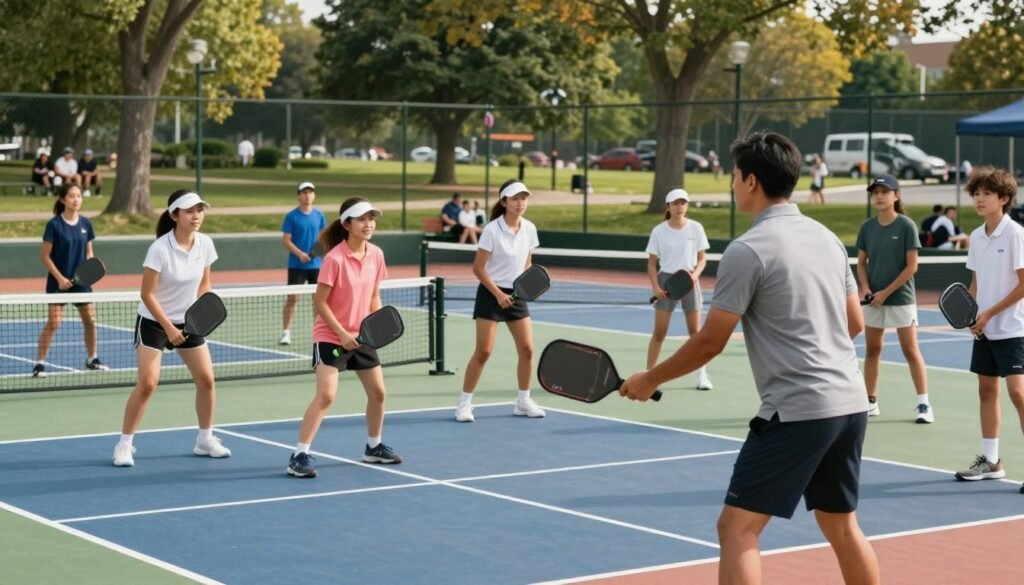
To attract and keep clients, you need to organize your coaching well. Offer a variety of services that meet different needs and likes.
Think about the good points of individual and group lessons. Individual lessons let you teach in a way that fits the client’s skill and how they learn.
Individual vs. Group Lessons
Group lessons, though, are cheaper and help people feel part of a community. They’re great for those who like learning with others.
| Lesson Type | Benefits |
|---|---|
| Individual | Personalized coaching, tailored to the client’s needs |
| Group | More affordable, social learning environment |
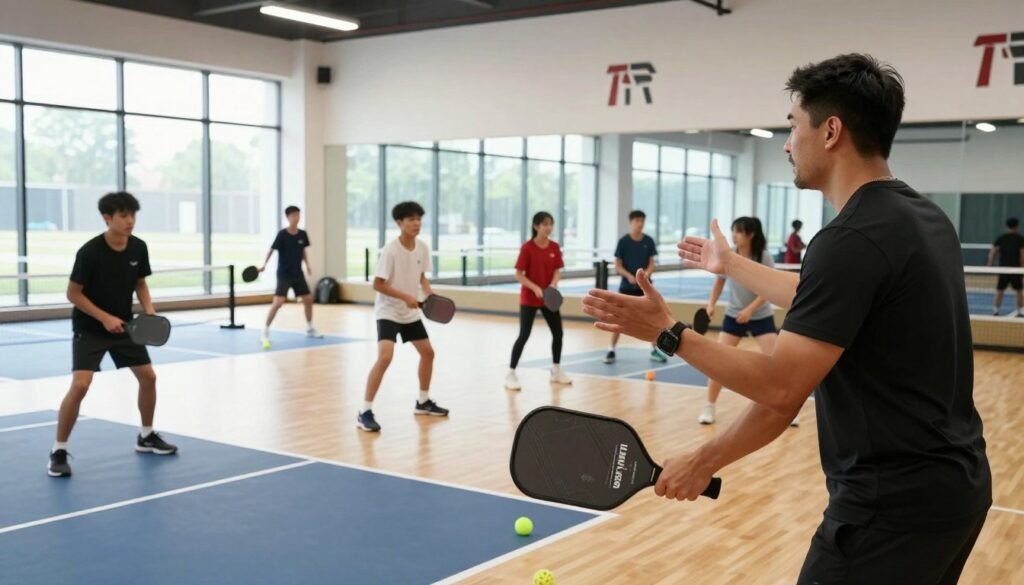
Specialized Clinics and Workshops
Also, think about specialized clinics and workshops. They can focus on skills like serving or volleying. This gives clients a chance to learn more deeply.
Client Management
Managing clients well is key to your pickleball coaching business’s success. It means organizing schedules, tracking payments, and keeping good relationships with clients.
Having a simple scheduling system is essential. You can use a calendar or a digital tool like Google Calendar. This makes it easy for clients to book sessions and for you to keep track.
Simple Scheduling Systems
Choose a scheduling system that’s easy for everyone. A good one lets clients book online and get reminders. This helps avoid no-shows and last-minute cancellations.
- Google Calendar: Integrates well with other Google services and is user-friendly.
- Scheduling Apps: Apps like Calendly or ScheduleOnce offer advanced features like automated reminders and time zone adjustments.
- Paper Calendars: For a more traditional approach, a dedicated paper calendar can be effective for small businesses.
Let’s look at some scheduling systems:
| Scheduling System | Ease of Use | Cost | Features |
|---|---|---|---|
| Google Calendar | High | Free | Reminders, Sharing |
| Calendly | High | Free/Paid Plans | Automated Reminders, Time Zone Adjustment |
| Paper Calendar | Medium | Low | Manual Entry |
Basic Payment Processing Options
For payment processing, keep it simple and secure. Use online payment platforms like PayPal or Stripe. They’re easy to integrate and keep your clients’ payments safe.
When picking a payment option, think about fees, ease of use, and security. PayPal and Stripe are good choices because they’re trusted and offer competitive fees.
- PayPal: Widely recognized and trusted, with competitive fees.
- Stripe: Offers flexible payment solutions with transparent pricing.
- Square: Provides a range of payment processing options, including in-person payments.
By using a simple scheduling system and secure payment options, you can manage your clients better. This lets you focus more on coaching and growing your business.
Scaling Your Business: Sarah’s Growth Journey
Sarah’s pickleball coaching business started to grow fast. She had to scale her operations to meet the demand. Scaling a business means making smart decisions that help both the business and its clients.
From Part-Time to Full-Time Coach
Sarah’s journey started when she became a full-time pickleball coach. This change let her focus more on coaching, marketing, and coming up with pickleball coaching business ideas. Being full-time helped her become more visible and build a strong reputation.
Adding Additional Revenue Streams
To grow her business, Sarah looked into additional revenue streams. She began to offer specialized clinics and workshops. This move not only added variety to her services but also brought in more clients. It was key to making her business more sustainable and profitable.
| Revenue Stream | Description | Potential Income |
|---|---|---|
| Individual Coaching | Personalized coaching sessions | $50-$100 per session |
| Group Clinics | Specialized group training | $20-$50 per participant |
| Workshops | Intensive training sessions | $30-$75 per participant |
By adding different ways to make money and focusing on pickleball coaching success, Sarah grew her business. Her story is a great example for other coaches wanting to expand their businesses.
Conclusion: Your Pickleball Coaching Success Blueprint
Follow the steps in this guide to build a successful pickleball coaching business. Focus on your target market and keep an eye on their needs. This is key to success.
Start by reviewing your business plan and make changes as you grow. Use strategies like specialized clinics and workshops to attract and keep clients. These tips can help your business grow.
Success in pickleball coaching takes dedication, patience, and flexibility. Stay true to your goals and keep improving your services. This way, you can build a valuable business that helps your clients and the community.
If you want to start a pickleball coaching business, focus on quality coaching and strong client relationships. With hard work and the right advice, you can reach your goals and have a rewarding career as a pickleball coach.